Showing posts with label Social. Show all posts

Trump's FCC Nominee Wants to Fight Social Media Censorship

FCC Trump Twitter Social Media

Trump’s FCC Nominee, Section 230, and the Long Fight Over Online Speech

In 2020, a long-simmering conflict over online speech, platform power, and government authority erupted into a full political and regulatory battle when President Donald Trump nominated Nathan Simington to the Federal Communications Commission (FCC). The move was widely seen as an attempt to use the FCC to challenge how social media companies moderate content—and to reinterpret Section 230 of the Communications Decency Act, the law that underpins most of today’s internet.

What began as a dispute over content moderation quickly evolved into a broader fight over free speech, censorship, regulatory overreach, and the future of user-generated content online. Five years later, in 2025, that fight is still unfolding—now largely in Congress and the courts rather than at the FCC.

Trump’s Executive Order and Claims of Online Censorship

In June 2020, President Trump issued an executive order aimed at what he described as political censorship by social media platforms. The order followed high-profile disputes between the White House and companies like Twitter and Facebook over labeling, removing, or limiting the reach of political content.

The executive order requested that the FCC clarify whether Section 230 protections apply when platforms “editorialize” or selectively moderate user speech. The administration argued that platforms acting as curators or publishers—rather than neutral conduits—should not automatically receive immunity from civil liability.

The order also called for:

  • Clear definitions of when moderation is conducted in “good faith”

  • Increased transparency around moderation rules and enforcement

  • Potential limits on immunity for selective or inconsistent moderation

While the order did not change the law itself, it marked a major escalation in the federal government’s involvement in platform moderation debates.

Understanding Section 230 and Why It Matters

Section 230 generally protects online platforms from being held legally responsible for content posted by users, while also allowing them to remove or restrict content they consider objectionable.

This legal framework made possible:

  • Social media networks

  • Online forums and comment sections

  • Review sites

  • Mapping platforms with user submissions

  • Community reporting tools

Without Section 230, many websites would face constant legal risk simply for hosting public contributions. Supporters argue that the law enables free expression and innovation, while critics claim it grants platforms too much power with too little accountability.

Nathan Simington’s FCC Nomination

Nathan Simington, then a senior advisor at the National Telecommunications and Information Administration (NTIA), played a central role in pushing the FCC to interpret Section 230. His nomination to the FCC was viewed as a strategic move to align the agency with the White House’s approach to tech regulation.

Simington supported the idea that the FCC could define when platforms lose immunity by failing to moderate content in “good faith.” Critics argued this approach would:

  • Expand FCC authority beyond its statutory mandate

  • Politicize an independent regulatory agency

  • Create legal uncertainty for online platforms of all sizes

Civil liberties groups, technology companies, and several lawmakers warned that such an interpretation could chill speech and invite government influence over moderation decisions.

The Removal of Commissioner Michael O’Rielly

Simington’s nomination came at the expense of FCC Commissioner Michael O’Rielly, a Republican who had been nominated for a third term but publicly questioned the administration’s legal strategy.

O’Rielly described himself as strongly committed to the First Amendment and expressed skepticism that the FCC had the authority to reinterpret Section 230. After he delivered a speech criticizing the executive order’s approach, the White House withdrew his renomination.

The episode highlighted growing tensions between:

  • Traditional free-market conservatives wary of government overreach

  • Populist factions seeking stronger action against Big Tech

It also raised concerns about political pressure on independent regulatory bodies.

Congressional Pushback and Limits on FCC Authority

Even within the Republican Party, there was significant resistance to using the FCC as a tool for regulating online speech. Senate Commerce Committee leaders argued that:

  • Section 230 is a statute written by Congress

  • Any reforms should be made legislatively, not by regulatory interpretation

  • Expanding FCC power could set dangerous precedents under future administrations

Ultimately, courts later ruled that the FCC lacked authority to implement the executive order’s vision for Section 230. The Biden administration reversed course, and the FCC has since avoided direct involvement in interpreting the law.

2025 Update: Section 230 Reform Moves Back to Congress

By 2025, the debate over Section 230 has largely shifted away from regulatory agencies and back to Congress, where lawmakers from both parties continue to propose reforms.

Current legislative efforts focus less on broad reinterpretation and more on targeted changes, including:

  • Limiting immunity for algorithmic amplification of harmful content

  • Addressing deepfakes and AI-generated abuse

  • Increasing transparency around content moderation systems

  • Clarifying liability for platforms that actively recommend content

Some proposals seek to narrow Section 230 protections, while others aim to preserve the law but add specific carve-outs for certain harms. Importantly, these efforts acknowledge what earlier attempts did not: only Congress can change Section 230 in a durable way.

The Risk of Unintended Consequences

Legal experts continue to warn that weakening Section 230 could have effects opposite of those intended. Increased liability risk could lead platforms to:

  • Remove more content preemptively

  • Limit user participation

  • Shut down comment sections or community tools entirely

Smaller platforms, local forums, and specialized sites—often without large legal teams—would likely be hit hardest.

Why This Debate Still Matters

The fight over Section 230 is ultimately about who controls online speech—private companies, the government, or users themselves. As platforms increasingly shape political discourse, public safety information, and local reporting, the balance between moderation, accountability, and free expression remains unsettled.

For data-driven platforms and community-powered sites like those in the DeadZones network, the outcome of this debate directly affects:

  • How information can be shared

  • How moderation decisions are made

  • Whether smaller platforms can continue to operate at scale

Five years after Trump’s FCC nomination battle, Section 230 remains one of the most consequential—and contested—laws governing the modern internet.

How Elon Musk is Fighting Social Media Censorship by Fact Checking

free bird cencorship

Elon Musk, a renowned entrepreneur and technology visionary, has taken a stand against social media censorship by championing the practice of fact-checking. 

How Do Cell Phones Affect Attention in School Classroom

cell phone distraction in classroom

Teachers have a hard time competing with cell phones for their students' attention.

As a teacher, you're probably used to students not paying attention in class. But a study by the University of Houston found that even when teachers are actively engaging their students and presenting engaging material, cell phones can still be more interesting than your lesson plan. Students' phones are personalized and often have games and contact with friends on them. They also offer constant distraction: if one student is on their phone during class, other students may feel like they need to check their own devices too.

In addition, it's not just about competition with cell phones—teachers can be less interesting than cell phones themselves! Many people find teachers boring because they're used to interacting online through social media platforms or texting friends instead of speaking face-to-face in class. Additionally, many young people don't have much respect for authority figures anymore because society has become so open and liberal; if you try telling a teenager not to use their phone in school now, chances are good that they won't listen or care what you say at all!

Is It Right For Schools to Block Cell Phone Reception?

Schools are increasingly becoming more aggressive about blocking cell phone signals in their classrooms.  Are they doing this because a few select students are abusing the rules of no cell phone?  There will always be students who break the rules and disrupt others but aren't there other ways to solve the problem of using phones in the classroom?  How about turning your phones off when you enter the classroom?   Turn them on vibrate?  No texting during class?  Confiscation of phones used during class?  

Our map has a database of school cell phone coverage problems you can search here.   


1)  Does the school block signals using a cell phone signal jammer?

2)  How far is the school from the nearest cell phone tower? 

3)  What material is the building made out of concrete, steel, or wood?

4)  Are hills or trees blocking cell phone signals?

5)  Does the school allow students to make phone calls and send text messages over WiFi when a cellular signal is not present?

6)  Has the school installed cell phone DAS antennas/repeaters?  

7)  Does the school have adequate WiFi coverage in every classroom and location throughout the school campus?  

Some teachers support the idea of using cell phones in class.

Cell phones are tools of the future.

You can use them to connect with students. Students and teachers often communicate via text messages, email, or social media. This allows you to communicate with your students outside of class time and gives them a way to reach out if they have questions or concerns about their work (or even just want some encouragement).

You can use them as an engaging tool in the classroom. If a student is bored or distracted by something that you're teaching, allow them to check their phone and then ask them how it relates back to the lesson at hand when they return their attention back to you and your lesson plan!

They can be used for assessment purposes so that teachers know which areas need more attention when working with each student individually after class periods end by using data collected through multiple assessments throughout different components like quizzes/exams etc...

Cellphones make research easier than ever before! Teachers will no longer have problems finding sources quickly because everything is right there on hand thanks on those handy little devices called "smartphones."

Teachers say that when they use cell phones in class, it changes their teaching style.

Teachers say that when they use cell phones in class, it changes their teaching style. The teacher must learn to use mobile technology to teach effectively; they must be willing to learn about new technology and be willing to change their teaching style if necessary.

Cell phone learning apps are being developed to make learning more fun and interactive.

Learning apps are being developed to make learning more fun and interactive.

Learning apps have been around for a long time, but they're becoming increasingly popular with students who want to learn on their own time. Not all learning apps are available for every operating system, such as Android or iOS (the operating systems for mobile phones). Some apps are free, while others cost money. Some are designed for teachers only; some are designed for students only (or both). Learning apps can help students focus and pay attention when using their cell phones for schoolwork, which can give them an edge over other kids who don't use this technology properly in class or at home. Teachers can monitor student progress through these applications if they wish to do so; this is especially helpful if there's an issue with discipline at school where certain types of behavior may need additional attention from administrators as well as parents!

Classroom learning and mobile phone use can go hand in hand, but it depends on the way mobile phones are used in the classroom.

In a classroom setting, there are many ways to use mobile phones as learning tools. Mobile devices can be used for taking notes and creating presentations, for example. Teachers can also create apps that harness the power of mobile devices and make them even more useful in the classroom setting. For example, an app might allow students to research topics and then share their findings with other students on the fly. In this way, teachers can incorporate technology into their curriculum while still maintaining control over what students access and how they use it in class.

The key to getting student attention is not banning all cell phone use during class time; instead, teachers should focus on when they want their students’ attention (i.e., during lectures) and develop strategies for making sure that happens without interrupting learning opportunities or causing distractions (i.e., having someone else take attendance).

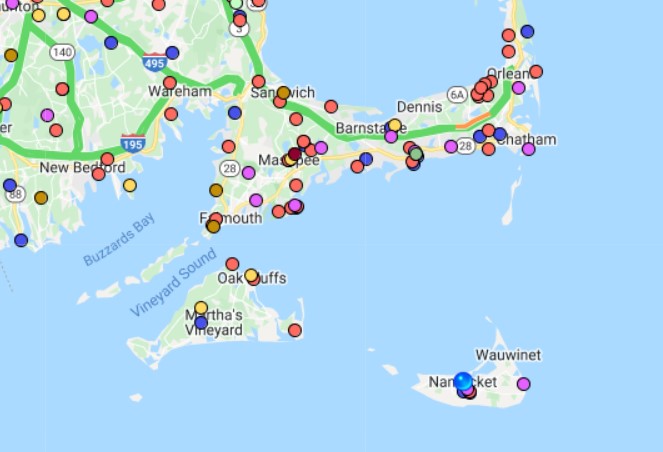
Nantucket is Full of Dead Zones & Residents Love It

Nantucket & Martha's Vineyard dead zones map

I have, unwittingly, become instantly identifiable by my red knit cap. I have been wearing the cap each winter for more than a decade, and on days when I wear something else, I am invisible. Invisibility is hard to come by on a small island. Even though we are well into spring, the wind is unrelenting. Red stands out on foggy mornings.

“I saw you on the way to work,” a woman at the coffee shop says, her eyes narrowing, “iced coffee on a day as windy as this?”

You can’t get away with anything out here, but I suppose I’ve always lived in fishbowls.

There are other people who have these sort of identifiers — the woman who rides her bike to the post office each day, chaining it to a lamppost. The man who leaves his truck with the dented bumper running outside the grocery store. The people who have this place memorized just so, they barely look up from their book or newspaper to navigate the cobblestones or splitting sidewalks.

You’re never more than twenty minutes away from everywhere else, and with cell phones, you’re always reachable. A lot of my friends are looking for ways to disconnect from the cloud these days, and find their way back to the real world. Their every digital move is monitored. They talk of social media cleanses, “dumb” phones that resemble the kind of plastic brick you might have kept in the glove compartment for roadside emergencies fifteen years ago, and erasing digital footprints.

There’s another way to escape all that. Nantucket is full of dead zones, places where the cell signal evaporates, and pockets of space where no one can reach you. Most people see this as an impediment. One website, yes, we can’t stay away from the internet entirely, says that Nantucket’s cell service is better than Cuttyhunk Island and Monomy in Chatham (thankfully, seals do not make telephone calls), but worse than every other city and town in the state. (I was in a Boston harbor tunnel a few weeks ago and the signal was clearer than anyplace on the island.)

I can’t fix them, so I might as well look forward to the dead zones on my walks around the island. I’ve started to pay more attention along these stretches of beach and bike path, slowing down to see if there is something here I should be noticing. Why this zone among all the others? Funny, how much of the world is moved by things unseen.

As we head into yet another overwhelming summer, I urge my fellow islanders to embrace the dead zones. Go to that beach where your social media pages won’t load. Take a walk on that path where news alerts can’t find you. Be invisible, just for a moment. It’ll all be waiting for you when you get back into service or put on your red cap.

Verizon's Social Media Customer Experience

Verizon's Social Media Reputation Management Team

If you are a VIP in the media and you write or say something negative about Verizon you might just get a call from one of these guys.  Here is a by Chris Dawson from ZDNet and his rant about Verizon’s inability to provide DSL service to an address where he had steadily been serving broadband for the previous three years.

@VerizonSupport on Twitter responded to my angry Tweets with offers of help if you follow them. Of course I’d follow them and send them a direct message with my issues! This, however, was not the panacea for which I was hoping.  Not surprisingly, I got a call the very next morning from Verizon’s “Social Media and Customer Experience Team.” These are what you’d call cleaners in a gangster movie. They make everything work for high-profile folks who will keep telling the world about their bad experiences if things keep going wrong. Fundamentally this really bothered me. Why should I get the royal treatment just because I get to write blogs on ZDNet and tens of thousands of people get to hear how upset I am?   Here is the full story
Verizon has an unrelenting reputation of phony marketing and social media content farms who try and squash any information that comes up in the media that is negative about the company.  If they can't squash the information they will just ignore it until they are forced into responding to it by a legal entity or government agency.  Verizon very often goes to extreme means of trying to get comments taken down versus actually doing any thing to resolve the problem.  We often say "Verizon's Arrogance Rules the Air" and Verizon has 5X more coverage lies than AT&T.  We have also seen many examples of Verizon using social media content farms who try to bury negative blog posts in Google  by writing bogus content for the search engines.  Deadcellzones.com and our mutual Verizon customers have poking holes in Verizon's dishonest coverage maps for years.   Now that the industry is down to two major corrupt companies AT&T and Verizon it just might be up to one of the smaller carriers like Sprint or cable company offering wireless to finally get aggressive about exposing the marketing fraud.

Wi-Fi Direct Location Based Social Networks

Smartphone Acting As A WiFi Hotspot
W-Fi Direct devices allow mobile mobiles to act like a Wi-Fi access router for Wi-Fi enabled machines. This is going to make it easy for groups of people in proximity to share files between laptops, phones or push a video from a handset to another Wi-Fi device. It could potentially be used for home entertainment networking, bars, sporting events, social gatherings, restaurants, conferences or multi-player gaming.  Wi-Fi Direct devices can now connect in a new way that makes it more simple and convenient than ever to do things like print, share music, videos and pictures on the home network.  This will undoubtedly open up brand new industries that feed off of location based social networks like Four Square, Gowalla, Facebook Places, Groupon.


It remains to be seen how manufacturers and carriers will allow consumers to use Wi-Fi Direct. The standard could be limited by manufacturers and wireless carriers, who may be wary of allowing the feature to flourish without their control. Carriers, for example, could prevent a phone from acting like a Wi-Fi hotspot, something they already do with some Android devices. Let’s hope that major players like Apple and Google let Wi-Fi Direct reach its full potential.  This will also probably be the beginning of the end for MiFi devices.
Sharing Music on iPhone Using WiFi Direct
The Wi-Fi Alliance said 82 million Wi-Fi-enabled portable consumer electronics devices and 216 million Wi-Fi handsets will ship this year with 26 percent annual growth projected through 2014.  Meanwhile Wi-Fi hotspots are growing at a rate of 40% per year to over 80,000 and that is 5X faster than cell phone towers.

Popular Posts