Showing posts with label GSM. Show all posts

Cricket Wireless Coverage Map (2025 Update)

Cricket is a prepaid wireless MVNO that is now owned by AT&T and operates on AT&T's GSM, UMTS, & LTE networks.

Cricket Wireless is a prepaid wireless carrier in the United States that operates entirely on AT&T’s nationwide network. Originally launched as a regional CDMA carrier, Cricket is now a wholly owned subsidiary of AT&T, offering prepaid service with access to 4G LTE and 5G coverage across most of the country.

Because Cricket uses AT&T’s infrastructure, its coverage closely mirrors AT&T’s native network—making Cricket one of the more widely available prepaid wireless options in the U.S.

👉 View the official Cricket Wireless coverage map to check service in your area before switching.  Read Our Cricket Wireless Coverage Map Reviews

What Network Does Cricket Wireless Use?

Cricket Wireless runs on AT&T’s GSM-based network, including:

  • 4G LTE

  • 5G (low-band and mid-band where available)

  • Legacy LTE fallback in rural and fringe areas

Cricket no longer operates its own towers. Coverage quality depends on AT&T’s network performance in your location, including tower density, terrain, congestion, and device compatibility.

Cricket Wireless Coverage Overview

Nationwide Reach

  • Strong coverage in cities, suburbs, and highways

  • Solid LTE coverage in many rural areas, especially along major corridors

  • Some coverage gaps remain in remote regions, deserts, and mountainous terrain

5G Availability

  • 5G access is included on most current Cricket plans

  • Performance varies by market and device

  • Cricket does not currently offer priority data over AT&T postpaid customers

Important Note on Data Priority
Cricket traffic is deprioritized during network congestion. This means speeds may slow in busy areas or during peak usage times, especially compared to AT&T postpaid customers.

Cricket Wireless Plans (2025)

Cricket offers simple, prepaid plans with no contracts and flat monthly pricing.

Common Plan Features

  • Unlimited talk and text in the U.S.

  • Unlimited data (with speed management)

  • Access to AT&T’s LTE & 5G network

  • Taxes and fees included in advertised pricing

Data Speeds & Throttling

  • Some plans include speed caps (for example, LTE speeds up to a set limit)

  • Higher-tier plans offer uncapped data speeds

  • After heavy usage, speeds may slow during congestion

Cricket also offers multi-line discounts, making it popular for families and group plans.

No Contracts, No Credit Checks

Cricket Wireless is fully prepaid:

  • No contracts

  • No credit checks

  • Cancel or change plans anytime

  • Pay month-to-month with no penalties

This makes Cricket attractive for:

  • Budget-conscious users

  • Students

  • Seniors

  • People rebuilding credit

  • Temporary or secondary phone lines

Devices & BYOD (Bring Your Own Device)

Cricket supports both phone purchases and BYOD.

Device Options

  • Budget Android phones

  • Mid-range smartphones

  • Select flagship devices

  • Regular promotions for switching customers

BYOD & Compatibility

  • Most AT&T-compatible unlocked phones will work

  • VoLTE and 5G compatibility depend on the device

  • eSIM is supported on many newer phones

Always check Cricket’s IMEI compatibility tool before switching.

International Calling & Roaming

Cricket offers several international features:

  • Unlimited calling to Mexico and Canada on select plans

  • International calling add-ons for additional countries

  • Limited international roaming (not global like postpaid carriers)

Cricket is best suited for domestic use with light international needs.

Customer Support & Retail Stores

Cricket provides support through:

  • Online account management

  • Phone support

  • Live chat

  • Thousands of Cricket-branded retail stores across the U.S.

In-store support is a major advantage for customers who prefer face-to-face help with setup, billing, or device issues.

Coverage Maps vs. Real-World Performance

Like all carriers, Cricket’s coverage maps show theoretical coverage, not guaranteed performance. Actual service depends on:

  • Tower congestion

  • Device radio quality

  • Indoor vs outdoor use

  • Terrain and building density

If you frequently experience dropped calls or slow data, tools like DeadZones.com help identify real-world problem areas reported by users.

SIM Cards, eSIM & Activation

You can activate Cricket service easily:

  1. Order a physical SIM or use eSIM (supported devices only)

  2. Activate a new number or port your existing number

  3. Complete activation online or in-store

Switching is typically completed within minutes to hours.

Is Cricket Wireless Worth It?

Pros

  • Nationwide AT&T coverage

  • Affordable prepaid pricing

  • No contracts or credit checks

  • Good family plan discounts

  • Physical store support

Cons

  • Data deprioritization during congestion

  • No premium roaming

  • Speeds may be capped on lower plans

Cricket is a strong choice for users who want reliable nationwide coverage at a lower cost, especially if AT&T performs well in their area.

Final Takeaway

Cricket Wireless combines AT&T’s expansive network with prepaid simplicity, making it one of the most accessible MVNOs in the U.S. While it doesn’t offer postpaid-level priority or premium perks, it delivers solid coverage, predictable pricing, and wide availability.

Before switching, always:

  • Check the Cricket Wireless coverage map

  • Confirm device compatibility

  • Compare real-world reports from tools like DeadZones.com
Best Cell Phone Reception Boosters

Few things are more frustrating than dropped calls, weak signals, or slow data speeds, especially when you rely on your phone for work, travel, and emergencies. Cell phone reception issues are common in rural areas, large buildings, and places with heavy network congestion. Fortunately, cell phone reception boosters—also known as signal boosters—offer an effective solution. These devices amplify weak cellular signals, improving call quality, data speeds, and overall connectivity. But with so many options on the market, how do you know which booster is best for you? This article explains how reception boosters work, reviews the top models, and highlights the features you should look for before making a purchase.

How Cell Phone Boosters Work

Sprint Service Plans and Coverage Review

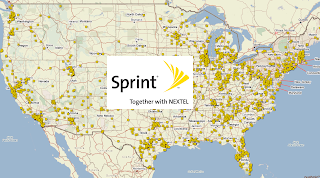
Sprint Dead Zones USA MapCoverage: Sprint, which is now part of T-Mobile, was a major wireless service provider in the United States. While the Sprint brand has been phased out, customers are now under the T-Mobile network and plans. Here is a review of T-Mobile's service plans and coverage, which now encompass former Sprint customers:

Plans: T-Mobile offers a range of postpaid and prepaid plans to suit different needs. These plans typically include unlimited talk, text, and data, with varying data speeds and data allowances. Customers can choose from different plan options based on their usage requirements and budget.

Coverage: T-Mobile's network coverage has expanded significantly after the merger with Sprint. They provide nationwide coverage across the United States, with improved coverage in rural areas and expanded 5G coverage in select cities. T-Mobile utilizes a combination of low-band, mid-band, and high-band spectrum to offer wide coverage and fast data speeds.

Unlimited Plans: T-Mobile offers several unlimited plans that provide unlimited talk, text, and data usage. These plans may have different data deprioritization thresholds, meaning that after a certain threshold of data usage, speeds may be temporarily reduced during times of network congestion.

Family Plans: T-Mobile provides family plans that allow multiple lines to share a data pool. This can be a cost-effective option for families or groups with multiple lines.

5G Network: T-Mobile has invested in the deployment of 5G technology and offers 5G coverage in various areas. Their 5G network encompasses both sub-6 GHz and mmWave frequencies, providing improved speed and capacity in supported locations.

Device Selection: T-Mobile offers a wide selection of smartphones and other devices for purchase. Customers can choose from flagship devices, mid-range options, and budget-friendly devices. They also support Bring Your Own Device (BYOD) programs, allowing customers to use their own compatible devices on the network.

Customer Service: T-Mobile has customer service channels available, including phone support, online chat, and in-store assistance at T-Mobile retail locations.

It's important to note that the information provided reflects the combined offerings of T-Mobile and Sprint following their merger. It's recommended to visit T-Mobile's official website or contact their customer service for the most up-to-date information on their current plans, pricing, and coverage in your specific area.

Finding the best cell phone coverage just got easier by comparing cell phone coverage reports from other customers. Which wireless carrier has the worst cell phone coverage?
Other Reviews: 
Feedback is always welcome. Please submit your comments below.

@SprintCare Twitter Chatter

AT&T Service Plans and Coverage Review

AT&T is one of the largest wireless service providers in the United States, offering a variety of service plans and extensive coverage across the country. Here is a review of AT&T's service plans and coverage:

Plans: AT&T offers a range of postpaid (contract) and prepaid plans to suit different needs. These plans typically include unlimited talk and text, with varying data allowances and speeds. Customers can choose from different plan options based on their usage requirements and budget.

Coverage: AT&T provides nationwide coverage across the United States, including both urban and rural areas. Their network covers a significant portion of the country, offering reliable connectivity in many locations.  AT&T operates on a combination of 3G, 4G LTE, and 5G networks, with 5G being the latest generation of wireless technology. The coverage and speeds offered by AT&T's networks have improved over the years, but they can still vary depending on factors such as signal strength, network congestion, and the type of device you're using.  

5G Network: AT&T has been investing in the deployment of 5G technology. They offer 5G coverage in select cities and continue to expand their network. It's important to note that 5G coverage may vary depending on your location and device compatibility.  AT&T's 5G network utilizes both low-band and high-band frequencies to provide broad coverage and faster speeds. AT&T's low-band 5G, also known as 5G Evolution, operates on sub-6 GHz frequencies, offering enhanced coverage compared to higher-frequency bands. This enables better penetration through buildings and obstacles. However, the speeds of low-band 5G may not be significantly faster than 4G LTE in some cases.

AT&T's network covers about 68% of the United States. This is 2% less than Verizon and 6% more than T-Mobile. AT&T has solid coverage in major cities, but not in rural areas. AT&T has the second-most 4G LTE coverage and the second-most 5G coverage of the major carriers. AT&T has the best latency. 

AT&T also deploys high-band 5G, commonly referred to as mmWave, in select areas. mmWave technology delivers extremely high speeds and low latency but has a shorter range and is more susceptible to obstructions like buildings and trees. Consequently, its coverage is typically limited to densely populated urban areas. In urban and suburban areas, AT&T generally offers good coverage and fast data speeds. 

The 5G network rollout is an ongoing process, and coverage availability and speeds may vary depending on your location. For the most up-to-date information on AT&T's 5G network and its coverage in your area, it is recommended to visit AT&T's official website or contact their customer support.

Unlimited Plans: AT&T offers unlimited data plans that provide unlimited talk, text, and data usage. These plans may have different data deprioritization thresholds, meaning that after a certain threshold of data usage, speeds may be temporarily reduced during times of network congestion.

Shared Data Plans: AT&T provides shared data plans, where multiple lines can share a pool of data. This can be a cost-effective option for families or groups with multiple lines.

Device Selection: AT&T offers a wide selection of smartphones and other devices for purchase. Customers can choose from flagship devices, mid-range options, and budget-friendly devices. They also support Bring Your Own Device (BYOD) programs, allowing customers to use their own compatible devices on the network.

Customer Service: AT&T has customer service channels available, including phone support, online chat, and in-store assistance at AT&T retail locations.

How to check your signal strength: You can check your AT&T signal strength by navigating to http://att.manager or http://192.168.1.1 from a connected device. The LTE icon will be displayed in the top right corner of the AT&T manager site when connected to 4G LTE. The Signal Bars display the connection strength. 

AT&T Coverage map
Other Reviews:
Feedback is always welcome. Please submit your comments below.

@ATTCares Twitter Chatter

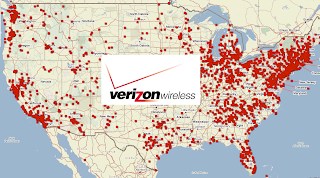
Verizon Wireless Plans and Coverage Review

Verizon Wireless is one of the largest wireless service providers in the United States, offering a wide range of mobile plans and extensive coverage across the country. Here is a review of Verizon Wireless plans and coverage:

Coverage: Verizon Wireless has a reputation for providing excellent coverage nationwide. Their network coverage extends to both urban areas and rural regions, making it a popular choice for customers who value reliable connectivity in various locations. Verizon operates on a combination of 3G, 4G LTE, and 5G networks, with 5G being the latest generation of wireless technology. The coverage and speeds offered by Verizon's networks have generally been highly regarded and widely available.

5G Network: Verizon Wireless has been at the forefront of 5G network deployment. They offer 5G coverage in select cities and continue to expand their 5G network across the country. It's important to note that 5G coverage may vary depending on your location and device compatibility.

Verizon 5G Nationwide utilizes low-band frequencies (sub-6 GHz) to provide broader coverage across the country. This type of 5G offers improved speeds and capacity compared to 4G LTE but may not deliver the ultra-fast speeds associated with higher-frequency bands. Verizon's 5G Nationwide network aims to provide a foundation of coverage, particularly in suburban and rural areas.

Verizon's LTE network covers over 99% of the US population. Verizon's 4G LTE network covers 71% of the US, making it the number one carrier in the nation. Verizon offers 5G access in 12.77% of the country. You can find Verizon's 5G Ultra Wideband network in parts of many major cities, including Los Angeles, Denver, Phoenix, Dallas, Houston, Chicago, Boston, New York, Atlanta, Miami, and Philadelphia.

Verizon 5G Ultra Wideband, on the other hand, operates on high-frequency mmWave bands. This technology provides extremely high speeds and low latency, making it ideal for densely populated urban areas. However, the mmWave signals have a limited range and can be easily blocked by obstacles like buildings or even foliage.

Verizon has been actively expanding its 5G Ultra Wideband coverage in select cities, focusing on high-traffic areas such as stadiums, airports, and downtown areas. This allows users in these locations to experience the full potential of ultra-fast 5G speeds.

Plan Options: Verizon Wireless offers a diverse selection of plans to suit different needs. They provide both postpaid (contract) and prepaid options. Their plans typically include unlimited talk and text, and data allowances vary depending on the plan. Customers can choose from plans with different data caps or go for unlimited data options.  In rural or remote areas, Verizon's coverage is generally more extensive compared to other carriers. 

Unlimited Plans: Verizon Wireless offers several unlimited plans that provide unlimited data usage. These plans may have different speed tiers, with the highest speeds available on the premium unlimited plan. It's worth noting that after a certain threshold of data usage (usually around 22GB per month), speeds may be temporarily reduced during times of network congestion.

Shared Data Plans: Verizon Wireless also offers shared data plans, where multiple lines share a pool of data. This can be a cost-effective option for families or individuals with multiple devices.

Device Selection: Verizon Wireless provides a wide range of smartphones and other devices for purchase, including popular flagship devices and budget-friendly options. They also support Bring Your Own Device (BYOD) programs, allowing customers to use their own compatible devices on the network.

Customer Service: Verizon Wireless has a reputation for good customer service and offers multiple channels for support, including online chat, phone support, and in-store assistance.

The cost of Verizon Wireless plans tends to be relatively higher compared to some other wireless service providers. However, the extensive coverage, reliable network, and available plan features make it an attractive option for customers who prioritize connectivity and need reliable service in various locations.

Plans:   Compare Verizon shared data plans

Finding the best cell phone coverage just got easier by comparing cell phone coverage reports from other customers. Which wireless carrier has the worst cell phone coverage?

Other Reviews:
Feedback is always welcome. Please submit your comments below.

@VZWSupport Twitter Chatter

T-Mobile Service Plans and Coverage Review

Coverage:  T-Mobile's coverage can be spotty in a few areas around the United States and Mexico, but not as bad as most people proclaim it to be.  Their features and flexibility far outweigh the lack of connectivity in most areas and provide the most valuable data plans.  If you don't have coverage in many areas simply make calls through T-Mobile's WiFi android app on some smartphones.  This is huge so you don't if you make a lot of calls indoors in remote places.  If you live in a major metropolitan area, it is likely you will have comparable coverage to AT&T and Verizon 3G in most areas.  One benefit of being a smaller carrier is that you are likely competing against fewer customers for network capacity. T-Mobile now has the best 4G (HSPA+) coverage and its great to be a customer with fewer people competing for coverage on the HSPA+ network.  The difference between 3G and 4G LTE is not that significant in my opinion if you are not downloading the video.  Nevada and some of the mountain states are some notable dead zones in their coverage network and even Northern California and Oregon have quite a few miles where service is not available. T-Mobile has network coverage in every state except Alaska; reception in rural areas can be spotty. Also, as with all carriers, the reception will vary due to location. International coverage is available in more than 187 countries. Their website does have a nice feature that allows you to check coverage areas by inputting your zip code and overlaps nicely with dead zones reported on our map on the right. If you travel a lot, they do have international service options, but it will cost you as roaming charges do apply.

Plans:  T-Mobile leads these carriers in free minutes and value now offering unlimited plans without long-term contracts. Prepaid cards are affordable if you only want a short-term plan.  For the money, they offer the freest minutes of any plan and likely the most value, depending on where you live. T-Mobile offers more plans that are typically less expensive, particularly for Internet access, text, and multimedia messaging services. They offer several plans, including business plans, pre-paid, family, and individual plans. They do offer free phones, subsidized phones, including camera phones, but if you want to choose a different phone than the one they offer you will have to pay for it.

Other features
  • Unlimited data plans still exist for some customers, grandfathered. 
  • Offers unlimited calling plans without long-term contracts is a great selling point
  • As a GSM carrier and a subsidiary of Germany's Deutsche Telekom, T-Mobile has extensive international roaming and thousands of Wi-Fi hotspots in the United States and Europe.
  • Of the major carriers, T-Mobile received the highest customer service rating by J.D. Power and Associates for several consecutive years.
  • T-Mobile is the only major carrier not to offer push-to-talk services.
  • We recommended you monitor your text messaging usage closely and get on an unlimited plan so you don't get charged the outrageous .25 cents per message if you go over.
  • Has 4G Coverage now in most cities. 
  • 5G LTE plans will come soon but 4G HSPA+ is plenty fast.  
  • T-Mobile has an Android phone with unlimited data plans.  We highly recommend it!
  • T-Mobile & Sprint merged but they are keeping separate business brand units similar to when they purchased MetroPCS. 

Finding the best cell phone coverage just got easier by comparing cell phone coverage reports from other customers. Which wireless carrier has the worst cell phone coverage?

Other Reviews:
Feedback is always welcome.  Please submit your comments below.

@TMobileHelp Twitter Chatter

Coverage Map Audits Are Needed

coverage map audit

Coverage map audits are indeed necessary to ensure accuracy, transparency, and accountability in the cell phone industry. 

Campus SIMs Coverage Map

Campus SIMs Coverage Maps

Campus SIMs powered by PureTalk is a prepaid wireless MVNO that operates on carriers of AT&T and T-Mobile GSM and UMTS networks.


No contract, hassle-free mobile plans designed for the convenience and needs of international students.  CampusSIMs, believes wireless should be easy and affordable for any student coming to study in the US.

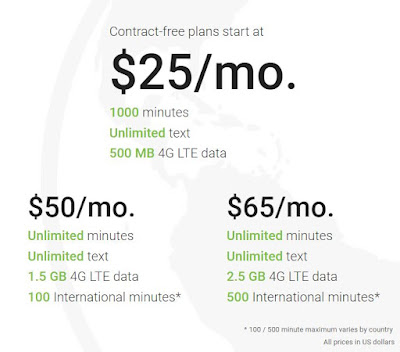
Campus SIMs offers no-contract monthly plans starting at $25, with low cost international calling around the world. All plans are equipped with free international inbound calling, multilingual customer support including English, Spanish, Mandarin.

You can purchase a Campus SIM card, which can be done on the CampusSims.com website. Order your SIM card online and CampusSims will ship to your home country or university campus. Once you have the SIM card in your possession, you can either Activate a New Phone Number or Port Your Existing Phone Number.

$25 - $65 per month for 500 MB, 1.5 GB, 2.5 GB
Campus SIMs Data Plans

 Please submit your reviews of the service and coverage below in the discussion.

Boom Mobile Coverage Maps

Black Wireless Coverage Map

Black Wireless MVNO AT&T Coverage Maps
Black Wireless Coverage Maps

Black Wireless is a prepaid wireless MVNO that operates on the AT&T's GSM, UMTS & LTE networks.

Black Wireless MVNO Data Plans $25 - $60 per month
Black Wireless Data Plans

You can purchase an Black Wireless SIM card, which can be done on the BlackWirelesss.com website. Once you have the SIM card in your possession, you can either Activate a New Phone Number or Port Your Existing Phone Number.

SDI has entered the Pre-paid wireless market with Black Wireless, a Nationwide cellular service with an multiple of Unlimited GSM Talk/Text/MMS/Data plans. Black Wireless comes with FREE International Calling from home and mobile and the SIM has a key Direct Dial feature which ties into

Please submit your reviews of the service and coverage below in the discussion.

Airvoice Wireless Coverage Map

Airvoice Wireless MVNO AT&T Coverage Map
Airvoice Wireless Coverage Map

Airvoice wireless plansAirvoice Wireless Database Plans

You may use any unlocked 850/1900 MHz GSM device with Airvoice.  You can purchase an Airvoice Wireless SIM card, which can be done on the AirvoiceWireless.com website. Once you have the SIM card in your possession, you can either Activate a New Phone Number or Port Your Existing Phone Number.  What towers does Airvoice Wireless use

Airvoice Wireless is a prepaid wireless service provider in the United States. They offer affordable no-contract cell phone plans and operate on the AT&T network, providing nationwide coverage.

Here are some key features of Airvoice Wireless:

Plan Options: Airvoice Wireless offers a range of prepaid plans with various talk, text, and data allowances to cater to different usage needs. They have both monthly plans and pay-as-you-go options, allowing customers to choose a plan that suits their usage patterns.

Unlimited Plans: Airvoice Wireless provides unlimited talk and text plans with varying data options. These plans include unlimited talk and text messages, and customers can select the amount of high-speed data they need each month.

Pay-As-You-Go: Airvoice Wireless offers pay-as-you-go plans for customers who prefer to have more control over their usage and only pay for what they use. With this option, customers purchase a specific amount of minutes, texts, and data that can be used within a designated time frame.

Bring Your Own Device (BYOD): Airvoice Wireless supports BYOD, allowing customers to bring their own compatible devices to use with their service. This gives users the flexibility to use their existing devices rather than purchasing new ones.

International Calling: Airvoice Wireless offers international calling options for customers who need to make calls to other countries. They have international calling add-ons or separate plans available for those who require frequent international communication.

Customer Service: Airvoice Wireless provides customer support through various channels, including phone support and online resources. They strive to assist customers with any questions or issues they may have.

It's important to note that coverage maps and network performance may vary, so it's always advisable to check the coverage availability in your specific area before choosing a wireless service provider.

Overall, Airvoice Wireless aims to provide affordable and flexible prepaid wireless service options with nationwide coverage on the AT&T network. If you are interested in their services, you can visit their official website or contact their customer service for more information on their current plans and offerings.

Please submit your reviews of the service and coverage below in the discussion.  

iPhone 4S Speed Test Chart

iPhone 4S Download Speeds Compared

iPhone 4S data speeds are the fastest on AT&T compared to Sprint and Verizon. A study performed by Metrico Wireless did 21,000 Web page downloads nationwide with the iPhone 4S and iPhone 4 over the networks of the nation's largest three carriers. Metrico also ran more than 8,000 data download and upload tests and generated about 6,000 voice calls with recorded human voices. The tests were performed in a certified lab as well as several locations in five unnamed cities.

AT&T was twice as fast as Verizon in Web browsing with the iPhone 4S, recording average page load times of 1.29 seconds, compared with Verizon's 2.60 seconds. Sprint's version of the phone took an average of 6.44 seconds for Web browsing page loads. In terms of specific data download speeds, AT&T had an average speed of 3.2 Mbps, compared to 1.0 Mbps for Verizon and .5 Mbps for Sprint, one-fifth the speed of AT&T. The peak data download speed on AT&T was 6 Mbps over its 3G GSM HSPA+ network. 

Cheap Unlocked Used iPhones For Sale

There are between 20 - 30 million inexpensive unlocked iPhones on the used market today and many of them are being sold on Amazon and eBay for $100 - $500.  Smart mobile phone shoppers can save lots of money buying a used phone that is unlocked.  Buying a cheap iPhone can save you lots of money using a cheaper data plan from T-Mobile or another GSM carrier.  We discovered do research that one-third of the iPhones being sold on eBay were unlocked.  Unlocking the iPhone is the process of using software to modify the iPhone to work with other GSM carriers if purchased from AT&T or CDMA carriers if you purchased a Verizon phone.


Related Stories:
How Many Unlocked iPhones Are There?
How to Unlock the iPhone 4 for T-Mobile

GSM CDMA Carrier Handset Competition Fair?


AT&T will soon consolidate T-Mobile and become the only GSM carrier in the US.  Tracfone is a pre-paid carrier that offers both GSM and CDMA so it doesn't really count.  Is this fair competition?  T-Mobile has been the only GSM alternative to AT&T and post-acquisition there will be none.  What happens to consumers who purchased GSM phones and want to move to another carrier?  What happens to the handset manufacturers around the World who want to sell their products in the US?  Why should consumers care about GSM?  If you travel internationally you will know what I am talking about.  GSM is the World standard for phones and allows you to travel in most countries around the World without buying a new phone.

Consumers will be facing very limited choices for wireless service in most regions. The result will be only two competing technologies (CDMA & GSM) that all wireless carriers use, all the small regional carriers have to negotiate roaming deals with either Verizon or AT&T if they want to offer full coverage to their customers. The deal would further entrench the playing field with one CDMA giant and one GSM giant and fair negotiations would be even harder.

Verizon is a CDMA carrier and Sprint operates iDen and CDMA phones that donot work in most countries when you travel around the world.   Smaller regional carriers MetroPCS, Leap, US Cellular and Tracfone all use  CDMA as well.  

10 Differences Between AT&T & Verizon iPhones

iphone 5

3G or 3G? The iPhone 4 will not work on any HSPA+ or LTE network so waiting for the iPhone 5 is your best option.  AT&T is building out its HSPA+ network which will be faster than 3G and thus waiting for the iPhone 5 might be prudent if you are already an AT&T and iPhone customer.  Verizon's 4G is going to be LTE and this should be fast but it's going to be very expensive and don't expect the phone to come out anytime soon.  4G HSPA+ works great on T-Mobile and it's fast and has been running for many months now on many Android phones.  

Data Speeds: AT&T does have a faster data network than Verizon's CDMA.  AT&T iPhone 5 will likely be compatible with HSPA+ and the iPhone 5 for Verizon will likely be on LTE.  No one knows exactly what the speeds will be but you will not likely notice the difference as a user.

Data Plans:  Paying $29.99 per month for unlimited data is very expensive especially when you are only using 50% or less of your voice minutes and that usage is declining.  

Multi-Tasking:  AT&T is only capable of talking on the phone while surfing the web or reading email.  Verizon says they are working on a solution but it will likely require WiFi.

Battery:  We speculate that AT&T's network might be a bit more battery-friendly than Verizon's CDMA network which has been notoriously bad on the Motorola Droid battery.

Tethering: It's not clear who will offer to tether and at what price but we speculate this will be an issue.  Most sophisticated users are simply tethering their iPad or Laptops and not subscribing to an additional data plan for the device.   T-Mobile's HSPA+ network is most friendly about tethering on the Android G2 and MyTouch phones.

Antenna:  Verizon moved the antenna on the phone presumably to fix the death grip problem.  However, it's not clear if the Verizon phone will still need an iPhone bumper to prevent the hands from shorting out the antenna signal.

Traveling:  GSM networks are more widely used worldwide and it's easier to switch data plans and SIM cards when traveling overseas.  

SIM Cards:  CDMA Verizon iPhones will not use a SIM card making it more difficult to switch handsets. 

Dropped Calls:  In theory, Verizon CDMA should drop fewer calls but it's not clear what impact the iPhone will have on its slower 3G data network.  It will likely be good at first but who knows what will happen if 5-10M users suddenly start taxing the network with data usage.

No Contract:  Verizon is starting to sell the Verizon phone without a contract as rumored in the press release.

What Does LTE Stand For?

LTE = Long Term Evolution
Long Term Evolution (LTE).  It is a new radio platform technology that will allow carriers to give you higher wireless upload and download speeds currently between 5-12 mbps but expected to increase. Verizon Wireless,  AT&T & MetroPCS in the United States and several worldwide LTE carriers began rolling out the new network in 2009.  The world's first publicly available LTE service was opened by TeliaSonera in the two Scandinavia in December of 2009.

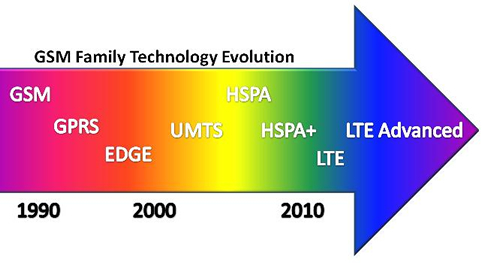
LTE and is part of the GSM evolutionary path beyond 3G technology, following EDGE, UMTS, HSPA (HSDPA and HSUPA combined) and HSPA Evolution (HSPA+). LTE is a set of enhancements to the Universal Mobile Telecommunications System (UMTS) which was introduced in 3rd Generation Partnership Project (3GPP) Release 8.  HSPA Evolution is a stepping-stone of speeds to LTE for many carriers that will be rolled out slowly. Carriers began working on LTE in 2004 3GPP and the initial deployment of LTE is targeted for 2010 and 2011. The objective of LTE is to provide a high-performance radio access that offers good signal coverage in vehicles that are moving and that can coexist with HSPA and earlier networks. Carriers can scale bandwidth to migrate their networks and users from HSPA to LTE over time in areas that need it most.

Related Articles:
List of Verizon Wireless 4G LTE Cities
How Does 4G & LTE Compete with Free?
LTE Cell Phone Tower Industry Growth
How Each Carrier Defines 4G
3G & 4G Coverage Parity by 2013
Will AT&T's New Faster HSPA+ Data Network Result in Fewer Dropped Calls?
Wireless Network Armageddon in 2012
Who Has the Best 4G Coverage?

What is Wireless Net Neutrality?

Imagine for a minute if highway toll roads only allowed certain makes of cars to use the road. If you didn’t have one of those approved vehicles to use the toll road, then you couldn’t use it. All toll roads are built with either special government funds or, in some cases, private funds authorized by the respective state government. But, in all cases, toll roads are built so that any car or truck can use them. They are not free: the charge is typically based on the amount of toll road resources that are used: 1) higher costs for larger vehicles (typically number of axles) and 2) higher costs for distance driven (typically set as a cost per mile).

Now, jump over to the world of mobile and wireless. We have a very different environment. Private companies have built wireless networks to operate on the spectrum that they have licensed from the FCC. Handset manufacturers have built phones that can operate on the wireless network’s spectrum. There are two kinds of technology used in the U.S.: 1) GSM, the same technology that is used in Europe and many other areas in the world (but at a different frequency) and 2) CDMA, which is implemented on fewer wireless operators in the U.S. including Sprint and Verizon Wireless.

The wireless operators – in order to protect and keep their networks separate from their competitors – require handsets to be developed only for their networks. This is ‘hard and fast’ for CDMA networks that require customers to activate their phone through Customer Service. GSM networks (AT&T and T-Mobile) use SIM cards that can be inserted into any GSM-compatible phone and run on any network (same as in Europe), although the toll charges may be different on each network.

The recent 700 MHz auction was an attempt by the FCC to make wireless networks more open so that they would operate more like a vehicle toll road: you could take any handset that is certified to run (like a car certified to meet all transportation requirements) and run it on any network of your choice. That would include taking a device built to run on AT&T (say an iPhone) and simply deciding to switch over and use Verizon Wireless. That would be interesting. Users would have more choice to take their phone and operate it on whatever network they wished either because of pricing advantage, service reasons, or any other reason.

The new 700 MHz open networks won’t happen for a while, but when they do, it will be a big experiment to see how handset manufacturers, wireless operators and users deal with their new found freedom. We’d like to have subscribers in the U.S. have at least as much freedom as those in Europe and other areas of the world: They can run their phone anywhere – on any network that’s built and made available.

When this happens, then handset manufacturers can build phones and sell them anywhere, not just through the wireless operator or the operator’s authorized retailer but, literally, anywhere – out of the back of a van, in a convenience store, or in places like Target. Operators would have to provide better services in order to attract subscribers. One might offer a faster network for lower cost, or another might drop far fewer calls, while still others might simply focus on basic services at the lowest cost possible.

What about applications? They should operate in the same manner. Developers should be able to build an application for, say, the iPhone, and get to publish it in the Apps Store without approval from Apple as long as it can be certified to run on the AT&T network and doesn’t crash or disrupt other applications on the iPhone or iPad. That would make applications really open.

Some applications, like those for adults, might have to require authentication that the subscriber is an adult (biometrics could do this) and operate out of a separate gated community. So, each platform such as iOS, BlackBerry, Android, Windows Phone, HP/Palm webOS and Symbian would provide an open environment for all applications -- not just those they like or judge to be ‘appropriate.’

In a dream world, it would also be nice if developers could write their application for one platform (say, Apple iOS) and easily migrate the application to another platform (say, BlackBerry). But, the platforms all typically have different APIs, toolkit libraries, and development editors that makes it impossible to have a ‘write once, run anywhere’ environment. (This was the idea behind Java but it didn’t work out as planned). Plus, you have different screens produced on different handsets that require customization as well.

And then there’s one more area of open to deal with: Can developers migrate outside their application store environment to build different applications that might serve different purposes -- such as manage the wireless connection in a more secure way? Or, another unapproved application might let users sync their music and video clips with their computer over Wi-Fi without using a cable. This process is often called ‘jailbreaking’ since the developer is moving outside the platform’s ‘walled garden’ to do something that is outside the boundaries of traditional applications. On July 26, the Library of Congress (which controls the U.S. Copyright Office) ruled that it is perfectly OK for developers to bypass the phone’s controls over what software will run. The ruling seems focused at Apple but the same case can be made for other platforms as well. Jailbreaking is more prevalent on platforms where there’s a tight ‘walled garden’ but doesn’t exist in other more open environments, especially when the source code for the platform is available to all (like Android).

While this column may appear to focus on Apple and it’s a relatively closed environment, the message about being open is the same for all SmartPhone platforms, for all wireless operators, and for all device manufacturers: Build products that conform to basic operating requirements set by the government but then let users choose what phone they want, what network on which they want to operate that phone, and then choose any application they want to run in that environment.

Simple and easy to declare. Much harder to actually implement. It seems so right and natural. If enough users demand it, then hopefully economic forces with government oversight will enable it.

Guest Article Written by J. Gerry Purdy, Ph.D. from Inside Mobile

How to Jailbreak the iPhone For T-Mobile

iPhone can be unlocked, which means you can use the phone on any GSM network

Popular Posts