Showing posts with label Connected Car. Show all posts

Boston CarPlay & Android Auto Dead Zones: GPS Dropout Hotspots

Boston Dead Zones

If your Apple CarPlay or Android Auto connection keeps crashing in the same parts of Boston, you're not alone. Drivers across the city report frustrating signal failures and GPS dropouts — especially in areas near the Charles River, Harvard's athletic fields, and Fenway.

Where CarPlay and Android Auto Fail in Boston

DAS (Distributed Antenna Systems): Challenges and Opportunities

Distributed Antenna Systems

Distributed Antenna Systems (DAS) play a vital role in improving wireless coverage and capacity in large venues, urban environments, and remote areas. As mobile data demand surges with the proliferation of 5G, understanding DAS's potential and challenges becomes increasingly critical.

This article explores the key challenges of implementing DAS and the opportunities it presents for network operators, businesses, and consumers.

What is DAS?

A Distributed Antenna System (DAS) is a network of spatially separated antennas connected to a central source. These antennas are strategically distributed to enhance cellular coverage and capacity where traditional networks may struggle, such as:

  • Stadiums
  • Airports
  • Skyscrapers
  • Tunnels
  • College campuses

By extending coverage, DAS ensures seamless communication in areas prone to weak signals or high congestion.

Challenges of Implementing DAS

While DAS offers significant benefits, several challenges can complicate deployment:

1. High Installation Costs

  • Expense: Deploying DAS involves substantial investment in equipment, labor, and engineering.
  • Cost Distribution: Organizations often struggle to justify costs unless they serve high-traffic areas.

2. Complex Integration

  • Infrastructure Coordination: Integrating DAS with existing cellular networks requires careful planning to avoid interference.
  • Technology Compatibility: Ensuring DAS works with multiple carriers and technologies, such as 4G LTE and 5G, can be technically demanding.

3. Regulatory Compliance

  • Permitting: Acquiring permits and adhering to local regulations can delay deployments.
  • Safety Standards: DAS systems must meet rigorous safety standards, especially in public venues.

4. Scalability Issues

  • Capacity Needs: As data demand grows, DAS installations must scale to support more users and higher speeds.
  • Future-Proofing: Upgrading existing DAS for 5G and beyond adds complexity.

Opportunities with DAS

Despite the challenges, DAS presents numerous opportunities for improving connectivity and user experiences:

1. Enhanced Connectivity in High-Demand Areas

  • Seamless Communication: DAS ensures uninterrupted service in crowded venues like stadiums or concert halls.
  • Capacity Management: Offloads traffic from traditional towers to prevent network congestion.

2. Support for 5G Deployment

  • Critical for 5G: DAS provides the infrastructure needed for dense, high-speed 5G networks.
  • Private Networks: Organizations can use DAS to create dedicated 5G networks for secure, high-speed communication.

3. Improved Emergency Response

  • Reliable Coverage: DAS enhances communication for emergency services in critical areas like tunnels and airports.
  • Public Safety: Supports first responder networks, ensuring rapid and reliable communication during crises.

4. Revenue Opportunities for Operators

  • Carrier Collaboration: DAS systems often support multiple carriers, creating revenue-sharing opportunities.
  • Business Expansion: DAS enables mobile operators to enter challenging markets, like remote regions or dense urban centers.

Conclusion

Distributed Antenna Systems are essential for meeting the growing demand for reliable mobile connectivity in challenging environments. While the initial investment and complexity of implementation pose hurdles, the opportunities for enhancing coverage, supporting 5G, and improving user experiences make DAS a worthwhile endeavor.

As technology advances and the demand for seamless connectivity intensifies, DAS will play a pivotal role in shaping the future of wireless communication.

Related Articles

How AirTags Enhance Vehicle Recovery: Innovative Tracking for Stolen Vehicles

Toronto man uses AirTags to track stolen SUV to Dubai

In the realm of vehicle security, Apple's AirTags have emerged as a game-changing technology for tracking and recovering stolen vehicles. This article explores the unique capabilities of AirTags in combating vehicle theft, providing valuable insights into how this innovative tracking device is revolutionizing vehicle security.

Understanding AirTags and Vehicle Tracking 

Google Releases New Peer-to-Peer WiFi Direct App

WiFi Direct

Google has launched an exciting Wi-Fi application that will not provide any useful features. The move, however, is part of a larger strategy by Google, which is working on bringing a variety of new wireless capabilities to phones that do not require an active internet connection. The new Wi-Fi features could be used in the same way that Bluetooth does, with the added benefit of being able to communicate over much longer distances.

The new Google app, dubbed WifiNanScan, is available for download from the Google Play store and is aimed at developers who want to work on Wi-Fi Aware apps.

The Wi-Fi Aware protocol (also known as Neighborhood Aware Networking (NAN)) is used by the WifiNanScan app to measure the distance between two smartphones. It's intended for use by developers, manufacturers, universities, and others as a research, demonstration, and testing tool. With this app, you can measure distances with an accuracy of about 1 meter between phones that are up to 15 meters apart. This tool can be used by developers, OEMs, and researchers to validate distance/range measurements, allowing for the development of peer-to-peer ranging and data transfer, find my phone, and context-aware applications using the WiFi Aware/NAN API. (WifiRttScan is another option.)

According to 9to5Google, Wi-Fi Aware is also known as Neighbor Awareness Networking (NAN). Wi-Fi Aware apps, which allow smartphones and other gadgets to discover and communicate wirelessly, would be able to run on devices running Android 8.0 or higher. The devices would be directly connected to each other, without the need for a Wi-Fi network or any other type of internet or GPS connection.

Wi-Fi Aware devices would be able to "share large quantities of data" and send short messages. According to Google, the technology allows for “higher throughput rates over longer distances than Bluetooth connections.”

Wi-Fi Aware has a variety of use cases, according to the Wi-Fi Alliance, ranging from simple things like communicating with people nearby to play games to more complex things like finding friends at a concert without using GPS. More advanced enterprise uses would be supported by the functionality, such as securely connecting to a printer without logging onto the network or making restaurant reservations by walking nearby, even when the restaurant is closed. Other situations include automating and timestamping school check-ins and roll-calls, as well as streamlining airport security processes by using a digital ID that can be sent wirelessly to authorities. Wi-Fi Aware can even help advance autonomous vehicle technology. It could “enable autonomous and remote-controlled vehicles to instantly become aware of other devices and automatically exchange information like GPS coordinates, altitude, direction, and owner ID,” according to the researchers.

Until then, Google will need to enlist the assistance of developers, which apps like WifiNanScan can do. The app has a lot less features than the previous examples. Wi-Fi is used by the app to accurately measure the distance between two phones. Google explains, "With this app, you can get a distance measurement with an accuracy of about 1 meter with phones up to 15 meters apart." “Using the WiFi Aware/NAN API, developers, OEMs, and researchers can validate distance/range measurements, enabling the development of peer-to-peer ranging and data transfer, find my phone, and context-aware applications.”

WifiRttScan, a similar app for indoor positioning, was released a few years ago. Instead of using GPS to locate users, the app uses Wi-Fi Round Trip Time.

In the future, Google may combine these Wi-Fi experiments to develop new functionalities for phones and other smart devices based on Wi-Fi Aware wireless connectivity standards.

For developers, manufacturers, universities, and others, the WifiRttScan app is a research, demonstration, and testing tool. With this app, you can get a range accuracy of 1-2 meters to nearby WiFi-RTT (802.11mc) capable access points. This is particularly helpful when there is no GPS signal. This tool can be used by developers, OEMs, and researchers to validate range measurements, allowing for the development of positioning, navigation, and context-aware applications using the WiFi-RTT API.

One important future application of this could also be connected cars!!!  

Does Your Car Have WIFI?

Connect your car with WIFI

Does your car have wifi and do you use it?@ #WiFi #twitterpoll
Having Wifi in your car is pretty cool especially when you have kids who want to surf the web and use devices that don't have data plans.  Most new cars these days have the ability to plug in a SIM card directly into the dashboard.  This allows you to connect your navigation system and entire car.  

What is Driving the FCC Auction of TV Spectrum?


Every city will soon see a transfer of airwave spectrum from broadcast TV to wireless Internet providers, FCC Chairman Tom Wheeler said today at the CES consumer electronics confab — 84 days before a long-awaited auction takes place.  Broadcasters have until Tuesday, January 12th to say whether they’ll offer some of their local air rights for the auction. As an incentive, the FCC has offered to share some of the proceeds from the sale.

The FCC is trying to create a market that will allow small players to buy wireless spectrum in all markets across the USA.  The process gives small TV stations a chance to cash out just as their business faces challenges from online video, wireless services and shifting audience behavior.  The auction demonstrates the shift in technology taking place across the media landscape—and resources being adapted to meet new needs. Momentum is tilting from over-the-air television to the Internet. As people use their smartphones to stay connected and watch video on the go, more bandwidth is needed to provide that connectivity.


The process will start off similar to a Dutch auction, in which values are set at a high level and then diminish until the FCC gets the licenses it needs at the lowest possible price. Once it determines the amount it will pay for each station, the agency will then turn around and sell the licenses to carriers like AT&T, Verizon and T-Mobile US Inc. in a traditional auction with rising bids. Sprint Corp. has decided to skip the auction. Any difference in the amount paid out to the broadcasters and the resale will go in the U.S. treasury. If the bids from the buyers are too low, the whole process will restart.
Read this article in the WSJ

Bidders on the reserve spectrum AT&T and Verizon can’t bid on, or at least not bid on initially, won’t be able to resell to those carriers for six years. Then there is an interim build-out requirement of 40% of facilities within those six years. But broadcasters could miss that deadline, said the source, with at least potentially no penalty except to have to shorten the 12-year 75% buildout requirement to 10 years. But with the ability to resell the spectrum to AT&T and Verizon after 6 years, they can effectively hold it then sell it without having to build out—though the buyer would have to build out on that abbreviated timetable. In addition, they could immediately re-sell reserve spectrum to other carriers than the low-band dominant ones, or sell unreserved spectrum to anyone, including AT&T and Verizon, immediately.  Article from BroadCastingCable.com


What Cellular Service Does Your Connected Car Use?

Based on Our Research These Are the Announced Connected Car & Carrier Deals We Found! 

AT&T
Telsa Motors
Ford
GM
Volvo
Nissan

Verizon
Hyundai
Volkswagen
Honda
BMW

T-Mobile
Audi

Sprint
Chrysler


Verizon 4G LTE Wireless Signal Booster

Verizon & AT&T 4G LTE Signal Booster

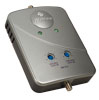
Now there’s a mobile signal booster for those using Verizon Wireless LTE devices.  The Sleek 4G-V from Wilson Electronics was announced this week.  You can boost AT&T's 700 MHz LTE (bands 12 & 17) signal as well as all carriers 3G & 2G cellular signals on 800 MHz & 1900 MHz.  The boost provides more than 20 times the power of your cell phone alone.  This booster will help you stay connected by providing a strong reliable signal in weak-signal areas indoors and outdoors in a car (1 or 2 bars), reducing lost dropped calls and speeding data rates.  It's designed for the car but will work anywhere.

The Sleek 4G-V works with all devices on all conventional 2G and 3G networks, except Nextel.  FCC type accepted.  Below is a diagram of how to set up the antenna for a typical car.

Verizon 4G LTE Signal Booster 


Related Articles: 

Don't Give Up Your Unlimited Mobile Data Plan


Consumers and service providers alike, are thrilled about the future, most notably in the exciting implications of a ‘connected world’. Consequently, reasoning between the two groups will most certainly vary. Mobile users, listen to my words - DO NOT GIVE UP YOUR UNLIMITED DATA PLAN. Sure T-Mobile and others still offer it, but the cellular savvy knows that other companies like Verizon and AT&T are essential ‘where it’s at. For starters, carefully scrutinize all ‘new offers’, weighing your decision before taking an attractive subsidy on a free phone, rendering your hard-earned unlimited data plan moot by being forced into a tiered/family plan. There are a number of paths to go here, and in this case, I’d recommend the one less traveled for the purposes of saving money and long-term entrapment.

By all means, continue to enjoy HD video, rich media, and robust offerings – with discretion and planning of course. Naturally, all of these great things consume exorbitant amounts of data, and it's especially difficult to keep track of such usage since these numbers are not as cut and dry as minutes. Though companies like AT&T and Verizon offer online data calculators to give ballpark figures for data use, it is hardly an exact science. Alas, you may quickly find yourself speeding towards or exceeding your cap, racking up an exorbitant bill in the process (Note: AT&T and Verizon charge $10 per GB in overages) All things considered, it’s simply impossible to keep track of usage progressively, with apps running in the background and data spikes incurred from streaming high definition video or audio – so what’s the problem if I’m holding onto my unlimited data plan, you ask?

Well, big providers have mulled this over for a long time, and are truly never losing on the infinite media playground. In fact, both AT&T and Verizon were found to have throttled the top 5 percent of data users. Once you’ve been marked as a heavy data user, your access will be slowed during congested network times to free up bandwidth. What does this mean? It means you should definitely use Wi-Fi hotspots wherever possible to bypass the provider network. In the event you need to upgrade in the future, make sure your phone supports 4G LTE (with more becoming available as the technology matures). The reasoning for this? In short, unlimited users will not have to deal with that limit as both Verizon and AT&T have noted handling of less than half their mobile data traffic on the 4G LTE network last year – this equates to less network strain, higher efficiency in data streaming, and zero governance over the enjoyment of a right you’ve earned - unlimited data.

Still, the number of unlimited data customers is beginning to dwindle – while usage is predicted to grow 13-fold over the next half-decade, according to Cisco. In the report, the networking giant predicted that mobile data traffic will expand to about 46 times the total amount of mobile IP traffic since 2010, with more than 10 billion connected devices by 2017. In the meantime, service providers will continue to throw out lines with attractive offers attached to lure consumers into abandoning their boundless access which will cost them and not you in due time [better yet, cost them less while costing you the same].

For now, companies are trapped into continuing to offer unlimited data to existing customers by abiding to the original terms of the contract or face legal backlash. The catch-22 is that this long-time, loyal subscribers won’t be able to fully enjoy new rollouts with an outdated phone that struggles to run them. I offer this advice: for the avid user of advanced features (who still has an unlimited data plan), it simply makes sense to hold on tight to that infinite data allowance by purchasing new devices on eBay (or comparable online marketplace) for a one-time fee and selling old ones to mitigate the total cost. For the rest of us, high expectations are going to naturally come with likewise prices. Without vigilance, the term pays now or pay later comes to mind in more than a literal sense. Whatever your circumstances, I wish you the best.

This article was written by Michael Roden, a VoIP Enthusiast & writer at GetVoIP.com, a VoIP Provider directory and service comparison guide.

Related articles:

Cowboy Stadium Cell Phone & WiFi Coverage?

Cowboy stadium inside

Carriers are starting to get more aggressive about improving WiFi, 4G and 5G coverage inside NFL stadiums and we want to know how they are doing.  

Smartphone Apps WiFi Only Option


If you are like the typical smartphone and cell phone user you are getting ripped off paying too much for your cell phone service plan.  Why, because the pricing plans are rigged and no matter what you change or remove from your plan you will always be paying $50-$100 per month.  Or worse yet you are overpaying for data and received bill shock. Even worse the carriers try to make it as difficult as possible for you to understand how much data you are using and want you to go over your data limits. Consumers who go over their data plans are not warned and often get shocked when they see their cell phone bill.

I am proposing that every application built on Android, iPhone and Windows be more transparent about whether you want it to access the carrier network or Wifi.  Also, it should track the amount of data it uses on the 3G, 4G, or LTE network.  Mobile apps fear data caps and carriers need to mandate this going forward for each application. Lawyers will be all over this with class-action lawsuits in the future if developers don't take it upon themselves to provide consumers with solutions that help them understand the amount of data they are using.  The most ethical developers will actually measure your usage and then tell you when are reaching a threshold.

If you are the typical consumer you are likely using 50% of your voice minutes, more text messaging and more data.  It's kind of crazy that 70% of your monthly bill is comprised of talk minutes yet you probably use data on the phone 90% of the time.  Another thing that is crazy is that you are likely uploading and downloading most of your data on your home Wifi network.  You are already paying for this data access and your cell phone company does not provide you with any transparency of how much data you are using on the 4G network.


With all of the problems the carriers are having getting their data networks in order.  They should be helping their customers use their 3G and 4G networks less and encourage customers to offload data via WiFi.  I think the future of 3G and 4G or LTE networks will be as a last resort and Wifi will be the standard now that hotspots are growing 5X faster than cell phone towers. AT&T was the first carrier to do this by removing all you can eat plans.

WeFi is a WiFi hotspot location service that works on a netbook, laptop, Symbian and Android platforms. The company helps members find nearby hotspots, complete with maps of their locations. There are also Symbian and Android mobile apps to work with WeFi on the go. The company collects anonymous data from devices that connect to a hotspot via the service, along with general information like how many devices are connected to a particular hotspot. With a population base of over 5 million users and a database of 60 million hotspots globally, the statistics show big changes in Wi-Fi usage. 50% of all Android devices analyzed consumed more than 500 MB of data per month each through Wi-Fi hotspots, and 20 percent of those Android owners flew through more than 2 GB of data over the month. That surprised me to see all of the free Wifi web usage and carriers need to change quickly as AT&T Wifi only has 20,000 free locations and this needs to change quickly for them to keep up.

Emergency Vehicles Need Cell Signal Boosters


Response times and emergency communication shouldn't not be compromised at the expense of poor cell coverage. Up until now, officers in Arizona have been living in an unconnected computer world taking handwritten notes during investigations and then driving to the nearest substation, often 80 or 100 miles away, to log into the computer systems. While in-vehicle computers and cellular modems are standard equipment for many law enforcement agencies across the U.S., making the department’s Mobile Data Computing Project work in Yavapai County, Arizona was a challenge due to weak cell signals provided by the carriers. The County covers 8,100 square miles, an area larger than several U.S. states, lying between suburban Phoenix and the South Rim of the Grand Canyon. The topography includes the Sonoran desert and mountains rising nearly 8,000 feet.  As the department researched the feasibility of implementing the upgrade, a field testing confirmed that the cellular signal in many areas of the county was too weak to allow in-vehicle modems to reliably connect with the department’s computer system.  Now their officers have the data connectivity resources in their vehicles.

The Yavapai Arizona Sheriff’s Office took it upon themselves to upgrade their data communications capabilities for more than 120 police cars installing cell phone booster systems made by Wilson Electronics. They didn't beg the carrier to upgrade their networks like so many agencies do.  To solve the problem the department installed Wilson boosters and antennas to detect and amplify faint cellular signals. The payoff has been clear and immediate enabling police officers to use on-board computers and cellular modems to access the department’s computer network and search for needed information or file reports directly from their patrol vehicles, even in remote areas of the county.

weboost

The officers recently went on a search and rescue operation in an area where the searching units had no cellular coverage according to their handheld devices, but with the air-cards in their vehicles, responding deputies had service through the Wilson booster and were able to instant message and stay in contact with the communications center.  The department also experienced another unexpected benefit shortening response times.

Wilson Electronics, Inc., a leader in the wireless communications industry for more than 40 years, designs and manufactures a wide variety of cell phone signal boosters, antennas, and related components that significantly improve cellular communication in mobile, indoor, and machine-to-machine (M2M) applications. All Wilson products are engineered, assembled, and tested in the company's U.S.-based headquarters. Wilson boosters fully comply with FCC regulations for cellular devices and are FCC type accepted and Industry Canada certificated. Wilson Electronics has developed and patented a variety of technologies for protecting cell sites by preventing network interference. For more information, visit weboost.com

Why Apple or Google Should Buy Pandora

Consumers Don't Want to Own Music Anymore

How much longer can iTunes maintain its leadership position as the middleman for content owners to consumers?  I think the device manufacturing giant needs to think very quickly about buying a service like Pandora.  What is holding them back from spending their $50 billion dollars in cash?  Do they think they can recreate a similar experience themselves?  Is Apple afraid of cannibalizing their business of music and programming downloads?  My sense it is likely because AT&T, Verizon, Sprint & T-Mobile don't have their networks in order to handle the additional data streaming on 4G, LTE, Wimax.  However, this could be a strategic move if the new iPods and Shuffles become Wifi enabled.  

Google on the other hand doesn't have a music play and Pandora will start being used more frequently in the car.  Google could quickly bring a lot of location based advertising inventory onto the market with Pandora's 50M+ users.  Apple and Google have both shown their interest in predictive analytics which is Pandora specialty in music. Pandora uses this predictive playlist to recommend other songs you might like to keep you connected. The predictive playlists are an incredible user experience and are starting to carry ads that are relevant to the music.  The Pandora experience on my Samsung TV and new G2 phone.  It won't be surprising to see that Google TV also has a streaming music option very soon.  The question is whether they build it or partner with someone like Pandora? 

How to Jailbreak the iPhone For T-Mobile

iPhone can be unlocked, which means you can use the phone on any GSM network

Femtocells for Rural Customers

It looks like femtocells may soon be used to serve sparsely-populated rural areas that are conventionally thought of as uneconomic to install a cell phone tower.  Femtocells can now serve as "instant economical infrastructure" to help emergency services or rural residents who are just fed up getting the run around from their local carrier or cell phone tower companies.  Getting the attention of carriers to install new cell phone towers has been the frustration of many wireless customers who live in remote areas.  Femtocells can now provide an economic alternative to to ugly and expensive cell phone towers that often require multiple carriers piggybacking upon a new development site.

Roke Manor Research a Siemen's company has developed the world's first 3G Wide Area Coverage Femtocell capability. Using picoChip's technology as the development platform, Roke's reference design has a 40km range which delivers more than 40,000 times the area covered by most other femtocells. It is also the first to support full mobility at speeds of up to 120 kilometres per hour, allowing mobile users to travel while connected to the 3G base stations. The femtocell will support up to 12 simultaneous users, with Release 5 HSPA and a software upgrade to Release 6.

Femtocell basestations offer a low cost and low power solution for implementing a WCDMA network. However, they are only suitable for short range communications of around 200m and as such are ideal for home networks. Roke, however, can now offer all the benefits of a femtocall (small size, weight and power consumption) with an enhanced range of up to 40km.

Roke has demonstrated a reference design on a picoChip PC202 platform. The Physical Layer code has been modified to extended the coverage area by 40,000 times whilst maintaining full mobility. In essence, the Roke modifications permit a macrocell performance in terms of range and mobility within a fetmo hardware platform. The modified solution has been tested on-air at ranges up to 25km and vehicle speeds up to 120km/hr.

Benefits of Roke's modified femtocell base-station include:

  • Small Form Factor
  • Low Power Consumption
  • Range up to 40km
  • Support of 16us Delay Span
  • Mobility up to 120km/hr
  • Up to 12 users
  • IP Connection to Network
  • Circuit Switched Voice Support
Related Stories:

Signal Boost For In-Building Coverage

Wilson Electronics launches SignalBoost DB Pro to improve in-building cell signal strength. It's easy to install kit that delivers the strongest cellular connection possible for mobile phones and data cards in any building experiencing weak cell signals.

ST. GEORGE, Utah – April 20, 2009 – Wilson Electronics, the leading provider of quality amplifiers and antennas for cellular phones and data cards, today announced the launch of the Wilson Electronics’ SignalBoost DB Pro™, the in-building wireless cellular amplifier kit that significantly improves voice and data performance of any cellular device, on any network, inside buildings or homes experiencing weak signals. Unique to the industry, the SignalBoost DB Pro is designed for simple installation without sacrificing the high-quality performance Wilson Electronics is known for.

“Dependency on cellular signals is on the rise as more and more people choose to drop their landlines in favor of their cell phones, making the need for strong cellular signal connection in the home, office, or any other building more important than ever before,“ said Joe Banos, COO of Wilson Electronics. “While most solutions on the market require complex installation or do not deliver the quality cellular signal enhancement promised, the SignalBoost DB Pro offers consumers, and professional installers, an easy to install, dependable solution, giving cellular users the confidence that their signal connections will be there when they need it most.”

At the center of the DB Pro kit is the dual-band amplifier with a new high gain design. An external omnidirectional high gain antenna with multiple mounting options eliminates researching cell site locations and antenna pointing. The inside panel antenna which rebroadcasts the amplified signal inside the home is designed for easy installation. All components are interconnected using provided standard TV cable which is also easily available and often found pre-installed, simplifying cable runs.

The SignalBoost DB Pro has been tested in real world, weak signal environments ensuring that consumers receive cell signals that could go undetected by most cell phones and data cards. Wilson Electronics’ patent-pending techniques monitor and prevent harmful interference to cell sites, allowing the amplifier to perform at the highest specifications for maximum performance. The kit increases power to the cell site up to 20 times over a typical cell phone and provides the bulk of the power needed for signal reception and transmission, allowing users also benefit from longer cell phone battery life. With minimal outside signal the DB Pro can typically provide coverage for an average 2,000 square foot home. If there is a stronger exterior signal, for example if the exterior antenna can be placed on the roof or above the tree line, the coverage could be up to 25,000 square feet.

The Wilson Electronics’ SignalBoost DB Pro kit includes:

* Dual Band bi-directional amplifier (62dB 75 Ohm)
* Power supply (110/220 V AC)
* Omni-directional exterior antenna with multiple mounting options (75 Ohm)
* Panel antenna (75 Ohm)
* 3 sets of standard TV Cable (RG-6 Cable in 50, 30 and 20 ft lengths)
* 30-day customer satisfaction money back guarantee
* One year warranty on all components

The SignalBoost DB Pro is now available through authorized Wilson Electronics’ dealers with an average selling price around $600. Visit the dealer locator page at www.wilsonelectronics.com to search for dealers by ZIP code, or to buy the product immediately from an online retail partner. For more information on how to become a Wilson Electronics’ dealer, visit www.wilsonelectronics.com/becomeadealer.php

About Wilson Electronics

Wilson Electronics, Inc., a leader in the wireless communications industry for over 40 years, pioneered the design and manufacture of a variety of cellular amplifiers, antennas and related components that significantly improve cellular communications in mobile or in-building installations. Wilson Electronics has consistently led the industry in performance standards and holds a number of patents including the industry’s fastest and most reliable method of oscillation prevention and carrier cell site protection. Wilson Electronics’ designs consistently outperform the competition in real world performance. All Wilson Electronics products are engineered, assembled and tested in the company’s headquarters in St. George, Utah. Wilson Electronics amplifiers fully comply with FCC regulations for cellular devices and are FCC and Industry Canada type accepted. For more information, visit www.wilsonelectronics.com.

*The SignalBoost DB Pro works with all carriers except those on the iDEN frequency. Contact Wilson Electronics for specific iDEN/Nextel Solutions

How To Select A Cellular Amplifier

With an estimated four billion cell phones in use worldwide, and the reliance on mobile voice and data on the rise, a strong cell signal is more important than ever. Cellular amplifiers have emerged as a viable tool to address cellular connectivity. Wilson Electronics outlines criteria for selecting the right cellular amplifier to protect consumers and ensure cellular signals stay within reach. The leading provider of quality amplifiers and antennas for cellular phones and data cards, released the six criteria to select a quality cellular amplifier to address the issue of dropped calls, slow data and bad cellular signal strength.

Due to a lack of industry standards in the cellular amplifier market, consumers are at risk of purchasing an inferior product that will not help them stay connected. “The lack of appropriate industry standards for cellular amplifiers allows for numerous products on the market that, while holding FCC approval, do not have the technical specification to deliver on their claims to improve cell signal quality to any significance,” said Joe Banos, COO at Wilson Electronics. “If a product does not meet six core elements, the user is at risk of purchasing a technology that cannot deliver on its promises.”

To protect buyers from purchasing a low-quality product, a cellular amplifier must have bi-directional amplification, high downlink receiver sensitivity, high uplink output power, oscillation detection and shut down cell site overload protection and a 100 percent unconditional customer satisfaction guarantee. With these elements, cellular phone and data card users can be confident that the amplifier they are selecting will virtually eliminate dropped calls, increase data rates and provide a quality cell signal.

6 Tips How To Select A Quality Cell Phone Amplifier

1) Bi-directional amplification: Select an amplifier that is bi-directional, meaning an amplifier that boosts both the cell site’s incoming downlink signal and outgoing uplink signal. Some amplifiers on the market only boost the downlink signal to the phone, with no amplification of the uplink signal. In this scenario, users will show an increase in bars and might be able to receive calls, but will not have the power to reach back to the cell site for a reliable call. High power uplink amplification yields two benefits - better call reliability and longer battery life.

2) High downlink receiver sensitivity: Receiver sensitivity is an amplifier’s ability to pick up weak signals that a typical cell phone may not hear. The higher the receiver sensitivity an amplifier can provide the better. Buyer beware, some amplifier manufacturers claiming to have high receiver sensitivity are touting numbers collected in perfect cellular signal scenarios. Quality amplifiers should be tested in real-world, weak signal, environments to ensure unsurpassed receiver sensitivity.

3) High uplink output power: The lack of output power from the phone to the cell site is the reason most dropped calls occur. Lowering output power is the easy and low-quality method to prevent oscillation and to keep costs down through less expensive components and simpler designs. By cutting these corners, many amplifiers on the market today deliver less output power than a typical cell phone or data card. Higher output power, with no corners cut, ensures the strongest possible cellular connection.

4) Oscillation detection and shutdown: Similar to a microphone being too close to a speaker, oscillation, also known as feedback, can be attributed to improper installation. However, improper design of a wireless amplifier can also be the cause. This oscillation can make cell sites shut down, violating FCC regulations. A violation could lead to fines imposed by the FCC and confiscation of a user’s amplifier. An amplifier that has a reliable and proven method of quickly and automatically detecting oscillation and shutting down when needed will protect both the cell site and the user.

5) Cell site overload protection: A quality amplifier is capable of monitoring proximity to a cell tower and automatically adjusts its output power to accommodate this change in distance. An amplifier operating at full power when too close to a cell tower will overload the site and impair service to a large number of users. Like oscillation, cell site overload can lead to intervention by the cellular operator and the FCC, as well as put the user at risk to costly fines and amplifier confiscation.

6) 100 percent customer satisfaction guaranteed: Identify a company that stands behind its products and be skeptical of sellers and manufacturers that do not offer an unconditional money-back guarantee. Also, read the fine print to make sure the guarantee you are getting is legitimate. A company that stands behind its products and offers extended customer services to the end-user, such as a U.S.-based tech support helpline, is a good indicator that the product is of high quality.

Wilson Electronics delivers proven, tested cellular amplifiers for in-building and mobile applications with industry-leading performance and quality. For more information about Wilson Electronics’ products and services visit. WilsonElectronics.com

Popular Posts