Showing posts with label Survey. Show all posts

Sprint Service Plans and Coverage Review

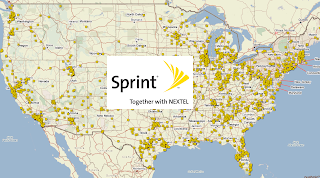
Sprint Dead Zones USA MapCoverage: Sprint, which is now part of T-Mobile, was a major wireless service provider in the United States. While the Sprint brand has been phased out, customers are now under the T-Mobile network and plans. Here is a review of T-Mobile's service plans and coverage, which now encompass former Sprint customers:

Plans: T-Mobile offers a range of postpaid and prepaid plans to suit different needs. These plans typically include unlimited talk, text, and data, with varying data speeds and data allowances. Customers can choose from different plan options based on their usage requirements and budget.

Coverage: T-Mobile's network coverage has expanded significantly after the merger with Sprint. They provide nationwide coverage across the United States, with improved coverage in rural areas and expanded 5G coverage in select cities. T-Mobile utilizes a combination of low-band, mid-band, and high-band spectrum to offer wide coverage and fast data speeds.

Unlimited Plans: T-Mobile offers several unlimited plans that provide unlimited talk, text, and data usage. These plans may have different data deprioritization thresholds, meaning that after a certain threshold of data usage, speeds may be temporarily reduced during times of network congestion.

Family Plans: T-Mobile provides family plans that allow multiple lines to share a data pool. This can be a cost-effective option for families or groups with multiple lines.

5G Network: T-Mobile has invested in the deployment of 5G technology and offers 5G coverage in various areas. Their 5G network encompasses both sub-6 GHz and mmWave frequencies, providing improved speed and capacity in supported locations.

Device Selection: T-Mobile offers a wide selection of smartphones and other devices for purchase. Customers can choose from flagship devices, mid-range options, and budget-friendly devices. They also support Bring Your Own Device (BYOD) programs, allowing customers to use their own compatible devices on the network.

Customer Service: T-Mobile has customer service channels available, including phone support, online chat, and in-store assistance at T-Mobile retail locations.

It's important to note that the information provided reflects the combined offerings of T-Mobile and Sprint following their merger. It's recommended to visit T-Mobile's official website or contact their customer service for the most up-to-date information on their current plans, pricing, and coverage in your specific area.

Finding the best cell phone coverage just got easier by comparing cell phone coverage reports from other customers. Which wireless carrier has the worst cell phone coverage?
Other Reviews: 
Feedback is always welcome. Please submit your comments below.

@SprintCare Twitter Chatter

Verizon Wireless Plans and Coverage Review

Verizon Wireless is one of the largest wireless service providers in the United States, offering a wide range of mobile plans and extensive coverage across the country. Here is a review of Verizon Wireless plans and coverage:

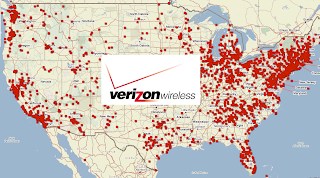
Coverage: Verizon Wireless has a reputation for providing excellent coverage nationwide. Their network coverage extends to both urban areas and rural regions, making it a popular choice for customers who value reliable connectivity in various locations. Verizon operates on a combination of 3G, 4G LTE, and 5G networks, with 5G being the latest generation of wireless technology. The coverage and speeds offered by Verizon's networks have generally been highly regarded and widely available.

5G Network: Verizon Wireless has been at the forefront of 5G network deployment. They offer 5G coverage in select cities and continue to expand their 5G network across the country. It's important to note that 5G coverage may vary depending on your location and device compatibility.

Verizon 5G Nationwide utilizes low-band frequencies (sub-6 GHz) to provide broader coverage across the country. This type of 5G offers improved speeds and capacity compared to 4G LTE but may not deliver the ultra-fast speeds associated with higher-frequency bands. Verizon's 5G Nationwide network aims to provide a foundation of coverage, particularly in suburban and rural areas.

Verizon's LTE network covers over 99% of the US population. Verizon's 4G LTE network covers 71% of the US, making it the number one carrier in the nation. Verizon offers 5G access in 12.77% of the country. You can find Verizon's 5G Ultra Wideband network in parts of many major cities, including Los Angeles, Denver, Phoenix, Dallas, Houston, Chicago, Boston, New York, Atlanta, Miami, and Philadelphia.

Verizon 5G Ultra Wideband, on the other hand, operates on high-frequency mmWave bands. This technology provides extremely high speeds and low latency, making it ideal for densely populated urban areas. However, the mmWave signals have a limited range and can be easily blocked by obstacles like buildings or even foliage.

Verizon has been actively expanding its 5G Ultra Wideband coverage in select cities, focusing on high-traffic areas such as stadiums, airports, and downtown areas. This allows users in these locations to experience the full potential of ultra-fast 5G speeds.

Plan Options: Verizon Wireless offers a diverse selection of plans to suit different needs. They provide both postpaid (contract) and prepaid options. Their plans typically include unlimited talk and text, and data allowances vary depending on the plan. Customers can choose from plans with different data caps or go for unlimited data options.  In rural or remote areas, Verizon's coverage is generally more extensive compared to other carriers. 

Unlimited Plans: Verizon Wireless offers several unlimited plans that provide unlimited data usage. These plans may have different speed tiers, with the highest speeds available on the premium unlimited plan. It's worth noting that after a certain threshold of data usage (usually around 22GB per month), speeds may be temporarily reduced during times of network congestion.

Shared Data Plans: Verizon Wireless also offers shared data plans, where multiple lines share a pool of data. This can be a cost-effective option for families or individuals with multiple devices.

Device Selection: Verizon Wireless provides a wide range of smartphones and other devices for purchase, including popular flagship devices and budget-friendly options. They also support Bring Your Own Device (BYOD) programs, allowing customers to use their own compatible devices on the network.

Customer Service: Verizon Wireless has a reputation for good customer service and offers multiple channels for support, including online chat, phone support, and in-store assistance.

The cost of Verizon Wireless plans tends to be relatively higher compared to some other wireless service providers. However, the extensive coverage, reliable network, and available plan features make it an attractive option for customers who prioritize connectivity and need reliable service in various locations.

Plans:   Compare Verizon shared data plans

Finding the best cell phone coverage just got easier by comparing cell phone coverage reports from other customers. Which wireless carrier has the worst cell phone coverage?

Other Reviews:
Feedback is always welcome. Please submit your comments below.

@VZWSupport Twitter Chatter

T-Mobile Service Plans and Coverage Review

Coverage:  T-Mobile's coverage can be spotty in a few areas around the United States and Mexico, but not as bad as most people proclaim it to be.  Their features and flexibility far outweigh the lack of connectivity in most areas and provide the most valuable data plans.  If you don't have coverage in many areas simply make calls through T-Mobile's WiFi android app on some smartphones.  This is huge so you don't if you make a lot of calls indoors in remote places.  If you live in a major metropolitan area, it is likely you will have comparable coverage to AT&T and Verizon 3G in most areas.  One benefit of being a smaller carrier is that you are likely competing against fewer customers for network capacity. T-Mobile now has the best 4G (HSPA+) coverage and its great to be a customer with fewer people competing for coverage on the HSPA+ network.  The difference between 3G and 4G LTE is not that significant in my opinion if you are not downloading the video.  Nevada and some of the mountain states are some notable dead zones in their coverage network and even Northern California and Oregon have quite a few miles where service is not available. T-Mobile has network coverage in every state except Alaska; reception in rural areas can be spotty. Also, as with all carriers, the reception will vary due to location. International coverage is available in more than 187 countries. Their website does have a nice feature that allows you to check coverage areas by inputting your zip code and overlaps nicely with dead zones reported on our map on the right. If you travel a lot, they do have international service options, but it will cost you as roaming charges do apply.

Plans:  T-Mobile leads these carriers in free minutes and value now offering unlimited plans without long-term contracts. Prepaid cards are affordable if you only want a short-term plan.  For the money, they offer the freest minutes of any plan and likely the most value, depending on where you live. T-Mobile offers more plans that are typically less expensive, particularly for Internet access, text, and multimedia messaging services. They offer several plans, including business plans, pre-paid, family, and individual plans. They do offer free phones, subsidized phones, including camera phones, but if you want to choose a different phone than the one they offer you will have to pay for it.

Other features
  • Unlimited data plans still exist for some customers, grandfathered. 
  • Offers unlimited calling plans without long-term contracts is a great selling point
  • As a GSM carrier and a subsidiary of Germany's Deutsche Telekom, T-Mobile has extensive international roaming and thousands of Wi-Fi hotspots in the United States and Europe.
  • Of the major carriers, T-Mobile received the highest customer service rating by J.D. Power and Associates for several consecutive years.
  • T-Mobile is the only major carrier not to offer push-to-talk services.
  • We recommended you monitor your text messaging usage closely and get on an unlimited plan so you don't get charged the outrageous .25 cents per message if you go over.
  • Has 4G Coverage now in most cities. 
  • 5G LTE plans will come soon but 4G HSPA+ is plenty fast.  
  • T-Mobile has an Android phone with unlimited data plans.  We highly recommend it!
  • T-Mobile & Sprint merged but they are keeping separate business brand units similar to when they purchased MetroPCS. 

Finding the best cell phone coverage just got easier by comparing cell phone coverage reports from other customers. Which wireless carrier has the worst cell phone coverage?

Other Reviews:
Feedback is always welcome.  Please submit your comments below.

@TMobileHelp Twitter Chatter

Better Business Bureau Gives AT&T an A+ Rating?

After yesterday's Consumers Reports review of AT&T the company has issued its own review sponsored by the Better Business Bureau of bureaucrats. AT&T highlights that according to the Better Business Bureau (BBB) its wireless service network is the best in the US by way of their subscribers complain the least.  AT&T thinks because they have the most customer that they have the most complainers.  According to the release in a 12-month period AT&T had the lowest number of complaints made to the BBB among the top four cellular carriers in the country. Verizon Wireless had 34% more complaints, Sprint had 115% & T-Mobile had 207% more complaints.

My presumption is that none of AT&T's customers even care that the BBB even exists and realize it is worthless to complain to a bureaucratic government agency that has no authority or power to do anything to help.  AT&T customers are a smart sophisticated audience and realize that complaining to the BBB more appropriate for cases like when your laundry mat steals your clothing and rips you off.  AT&T users are not dummies and this report tells me absolutely nothing other than it would behoove AT&T customers to also cover their bases and call the BBB about AT&T during the next 12 months.  We will follow up on a report in the next 12 months to see how the complaints stack up after their customer base actually knows now that the BBB is a resource for complaints.  

Cowboy Stadium Cell Phone & WiFi Coverage?

Cowboy stadium inside

Carriers are starting to get more aggressive about improving WiFi, 4G and 5G coverage inside NFL stadiums and we want to know how they are doing.  

AT&T Dropped Calls

In a poll that asked 4,040 smartphone users in March how many dropped calls they had experienced in the past three months, AT&T — the exclusive U.S. carrier of Apple's (AAPL) iPhone and iPad mobile devices — came in dead last among the country's four largest carriers.   

We can show you where AT&T drops calls according to our users by search our database at Deadcellzones.com/att

Verizon (VZ) customers reported losing only 1.5% of their calls over the past three months, the lowest in the smartphone industry and the lowest percentage for a carrier ever recorded by ChangeWave.  AT&T customers, by contrast, reported 4.5% of calls dropped in the last three months. That's one out of every 22 calls — three times as many as Verizon's and the worst percentage ChangeWave has ever seen.  In the same survey, Sprint (S) was the country's second most reliable carrier, with 2.4% of calls dropped, and T-Mobile (DT) the third, with 2.8% of calls dropped. See graph.

How to Report Cell Reception Problems

How to Report Cell Phone Reception Problems to AT&T, Verizon, Sprint, T-Mobile, MetroPCS, TracFone (Video)

Wireless coverage is a personal issue and most customers want transparency about where wireless service will work as advertised. Most coverage problems can be fixed with new cell phone towers, distributed antenna systems, picocells, repeaters and femtocells provided by the carrier

Step 1 - Select a carrier AT&T, Verizon, Sprint, T-Mobile or Other Carrier and search the map by zip code, city, state. Double click on pins to review the comments from others.
Step 2 - Grab the pin on the left-hand side of the map and drag it to the new location and add comments about the problem location and how often it occurs - In-building, Outdoors, Data Congestion, Dropped Calls
Step 3 - Share the map with your family, friends and colleagues to get the attention of your carrier in your neighborhood.
Step 4 - Check back frequently for comments posted by others, service providers to the carriers who try to fix the coverage problem with new antennas, cell phone towers, femtocells or repeaters.

Satellite Coverage Maps for Cell Phones

Satellite Coverage Maps You Can Believe

SkyTerra's satellite network system operates over North America and within 200 nautical miles of the waterways surrounding North America.  Terrastar's coverage map is a lot more believable coming from low level orbit versus AT&T's, Verizon & Sprint maps which are derived from cell phone towers on the ground.    Satellite cell phone service is coming to the masses and should be a viable alternative to the congested and spotty cellular networks.  If you have needs for reliable cell phone coverage, especially in the Western US you will be a good candidate for this new service.  

A prominent New York hedge fund billionaire intends to take on several of the country's biggest telecoms by building a massive 4G wireless network that one analyst has called "breathtaking in its ambition." Harbinger Capital Partners, run by Philip Falcone, and SkyTerra announced a merger -- a take-private deal with an enterprise value of nearly $2 billion, according to the companies. The FCC formally approved the deal last Friday.

Harbinger issued a statement saying it's building a new network that will cover most of the country by 2015, with tests rolling out in Denver and Phoenix next year. Falcone aims to use spectrum owned by his satellite investments -- including SkyTerra and TerraStar -- to build a wholesale data network "that could be resold by anyone wanting to offer 4G services to their customers, such as retailers or laptop/device manufacturers."

SkyTerra's satellite network system operates over North America and within 200 nautical miles of the waterways surrounding North America. Certain technical considerations and limitations, as well as the nature of customer terminals, can affect the availability of service in certain areas, including Alaska and Canada. In addition, the availability of service at the edge of coverage fluctuates depending on various conditions.

Related Article:

FCC Violates Our Trademark

 
The FCC recently launched an application to test mobile broadband speeds. FCC Consumer Broadband Test & Deadzone Report.  We would like to politely ask the FCC to stop using our trademark for a product that competes with our service Report Broadband Dead Zones.  Name it anything you want just don't use the term "dead zone" or "dead zones".

We are pursuing this matter through the press so we do not waste additional taxpayer dollars on lawyers that are not needed to resolve a simple issue.  Our request is similar to Verizon's violation of our trademark in 2008 using their Verizon 3G Dead Zones Commercial back in 2008 during the Super Bowl.  They kindly cooperated thanks to some helpful Verizon PR folks and the term has not been used in a commercial.

We request that the FCC name its' mobile measurement product anything other than Dead Zones, 3G Dead Zones, 4G Dead Zones, LTE Dead Zones, Dead Cell Zones, Broadband Dead Zones or Wi-Fi Dead Zones as we have worked very hard to build our brand and don't need the government stepping on our efforts.  It should not be too hard to change the name since this is the first day in use and this is your first notification.  There are plenty of other terms available to use that make the point such as Slow Connections, Poor Connections, Dropped calls, Dead Spots, Dead Patches, Dead Areas, and Poor Coverage would be terms that would be more appropriate and might be available without violating our trademark.

We have spent almost ten years building our brand and don't want it destroyed by big government and the lack of due diligence. The FCC has 1,900 employees and is supposed to act as an "independent agency" of the US government with an approximate budget of $466 million which is funded by $1 million in taxpayer appropriations and the rest in regulatory fees paid by the largest telecom companies in the US (AT&T, Verizon, T-Mobile, Sprint, Cox, Comcast, TimeWarner, CableVision, etc. It doesn't sound too independent when 99% of your revenue comes from the companies you are supposed to regulate.  $465 million of your dollars are funded by organizations that don't like our service because it exposes their bullshit coverage maps.

We have offered to donate our data for free to the FCC yet they can't take our dead data because of political pressure from their customer the wireless carrier.  This lack of administrative accountability on behalf of the taxpayer is ridiculous.

As a side note, if you think using the term "Broadband" is a loophole you are wrong.  The term refers to cell phone connectivity according to Wikipedia (broadband). Dead Zones can also refer to Ocean Dead Zones (Ecology) but this is clearly under different contexts and not in violation.

We also have an iPhone in the approval process and guess what it called "Dead Zones" using our trademark

Mobile Blackspots Map for the UK


We are huge fans of the fact that Vodafone will start advertising femtocells.  It's impressive to see Vodafone stepping up and taking the industry lead educating consumers about the new products to consumers in the UK using the brand Sure Signal.  Vodafone's Sure Signal guarantees you a great 3G signal at home, no matter where you live, and promotes the fact it might be an emergency risk if you are living in a coverage hole.  This is something the U.S. carriers have tried their hardest to ignore.  See their promotions and website above and watch the stories of people from around the UK who have been rescued from their mobile signal problems.  I am quite proud of a carrier finally admitting that they have coverage holes and giving consumers the ability to do something about it.  Kudos to Vodafone UK!

It will remain to be seen if the U.S. carriers still want to "blow smoke" up our asses with their ridiculous commercials touting their great coverage.  AT&T, T-Mobile, Sprint & T-Mobile have been dragging their feet for years "testing" femtocells in the U.S. and not educating their customers that they actually exist.  It also amazes me that Vodafone owns 45% of Verizon in the US yet it seems so against Verizon's arrogant culture to admit they actually have coverage problems with their network.  Do you think Verizon's marketing executives who came up with their moronic coverage map promotion commercials are going to be able to keep their jobs or are they going to have to do an "About-Face" (look in opposite direction) if they start selling femtocells in the U.S.?  Hmmm . . . we shall see.

As a result of Vodafone's leadership, Deadzones.co.uk has launched a new "Consumer Generated Mobile Blackspots Map" asking where mobile customers don't have problem areas indoors and outdoors.   Even if Sure Signal can solve the problem indoors at your home or office there are still many bad patch locations around the UK.  We ask for users to contribute pins in our map for 3, O2, Orange, T-Mobile, and Vodafone. Please also see this UK Blackspots Facebook discussion board we started under Vodafone's profile. 

Verizon Femtocell Sells For $249


After all of the "Can You Hear Me Now Commercials" and "AT&T Coverage Map Bashing"  Verizon Wireless still has incredible amounts of Dead Zones to fill in. You would never know from their misleading commercials but less than 50% of US homes have seamless wireless coverage and could use a femtocell to improve home coverage.  However, in order to improve Verizon's coverage in your home you the customer must pay for your own personal mini cell phone tower at a cost of $249.  Keep in mind Verizon's femtocell is only 2G as well and not 3G currently.   

Sprint was one of the first carriers to launch femtocells with Sprint Airave (awful close to the trademark name Airwave) in 2008, but Verizon was not far behind in bringing femtocells to the masses with a Verzion Wireless Network Extender in January of 2009.  AT&T 3G Microcell is also in trials in North Carolina, Georgia and San Diego and is expected to launch nationwide sometime in the Spring of 2010.  T-Mobile is also in trials with Ubiquisys and Huawei and is expected to launch something this year as well.  The black box will send out a CDMA signal covering up to 5,000 square feet of the home or office with support for up to three simultaneous calls. Like Sprint's solution, the Wireless Network Extender uses GPS to verify that you're not creating little tiny Verizon networks outside the U.S. and plugs into the internet source of your choice via Ethernet. It'll be available in Verizon stores and online for $249.99. Pretty expensive if you ask me and not clear if an additional monthly subscription or long term contract goes with it.  We have only read reviews online that are quite negative about the price but would like to hear from consumers who actually use the product in our comments section below. 


Be aware of the pros and cons with cell reviews allowing you to compare before deciding on a mobile phone purchase.

Best Cell Phone Service In Your Area

Best Cell Service Phone Service In Your Area

The single most common question we get asked on a regular basis is "Which carrier has the best cell phone service"?  My answer is always, "it depends where you live and work."  Cell phone coverage is a very personal issue due to the number of variables that can create coverage like terrain, the distance of the tower handsets, building material, weather and heavy users competing for the network near you.  The US carriers have been pulling the wool over our eyes for the last two decades and have conditioned consumers to look at their coverage maps from a 20,000-foot level and assume all customers are equal.  We all know that their coverage maps are useless especially if you are indoors, on the fringe of their network or roaming on another carrier's network.

So we have developed a methodology of benchmarking cell phone service to determine who has the best cell phone coverage based on who has the worst coverage.  The proper questions should be stated as who has "less bad coverage" or who has the most pins on your "inverse coverage map".   The only challenge with this methodology is it assumes that you are reaching equal amounts of customers for AT&T, Verizon, Sprint and T-Mobile.  For better or worse AT&T and Verizon have two-thirds of the entire US mobile phone consumer market so our data is a bit skewed to them right now.
Choosing a cell phone carrier can be a little overwhelming especially if you are moving to a new area or traveling.  Understand equally your wireless needs, coverage in your neighborhood and what features each carrier offers is important before selecting coverage.  Once you find the best cell phone coverage or learn how to fix your in-building coverage using femtocell, microcell, UMA phone, VoIP, or repeater it is easy to pick the plan that fits you best.  The top four carrier service plans and coverage are compared below.

Popular Posts