Showing posts with label Reception Issues. Show all posts

Where is AT&T Fixing Outdoor Reception?

AT&T Antenna Adjustment on Highway 101 for Dropped Calls

AT&T is one of the largest wireless carriers in the United States, serving more than 240 million subscribers nationwide. Despite its vast infrastructure, many customers still encounter outdoor reception problems—dropped calls, weak signals, or slow data speeds. Outdoor coverage is especially critical for travelers, rural residents, first responders, and businesses that depend on reliable connectivity. Over the past few years, AT&T has invested heavily in network improvements, 5G expansion, and small cell deployment to address these issues. But where exactly is AT&T fixing outdoor reception? This guide explores the key areas where the carrier has made improvements, why reception varies, and what customers can do to take advantage of better coverage.

Why Outdoor Reception Matters

Outdoor reception is the backbone of mobile connectivity. While indoor coverage often depends on building materials and Wi-Fi availability, outdoor signals come directly from cell towers and small cells. Strong outdoor coverage ensures reliable calls, fast mobile internet, and consistent performance for navigation, video streaming, and mobile payments. Without strong outdoor signals, even the best smartphones can struggle. AT&T’s network improvements are targeted at reducing these gaps and strengthening performance across rural highways, suburban neighborhoods, and dense urban environments.

AT&T’s 5G Expansion

AT&T has aggressively rolled out 5G coverage across the United States. Its strategy involves two key technologies:

  • 5G+ (millimeter wave): Ultra-fast speeds in dense urban areas such as downtowns, stadiums, and airports. Ideal for high-capacity zones but with limited range.

  • 5G mid-band and low-band: Wider coverage for suburban and rural areas. These bands travel farther and penetrate obstacles better than millimeter wave.
    Cities like Dallas, Atlanta, Los Angeles, Chicago, and Miami have seen significant improvements in 5G+ coverage, while smaller towns are increasingly benefiting from mid-band 5G. Customers in these areas report stronger outdoor signals and faster data, even during peak usage times.

Rural Coverage Improvements

One of the biggest challenges for AT&T has been extending reliable outdoor reception to rural America. Large distances between towers, mountainous terrain, and lower population density make it harder to justify investment. However, AT&T has participated in the Federal Communications Commission (FCC) rural broadband initiatives and FirstNet, the nationwide public safety network. As part of these projects, AT&T has added thousands of new towers and upgraded existing sites in states such as Montana, Wyoming, West Virginia, and rural Texas. Ranchers, farmers, and small-town residents are beginning to see more consistent outdoor signals where coverage was once spotty.

Suburban Small Cell Deployment

In suburban communities, outdoor reception often suffers due to tower congestion and interference. AT&T has responded by installing small cells—low-powered antennas mounted on streetlights, utility poles, and buildings. These small cells strengthen reception in neighborhoods, parks, and shopping districts. For example, suburban areas around Phoenix, Orlando, and Nashville have benefited from expanded small cell networks. These upgrades provide more reliable voice service and reduce data slowdowns in areas where traditional towers once struggled.

Coverage Along Highways

Highway coverage is critical for truckers, commuters, and travelers. Dropped signals along interstates create safety concerns and limit productivity. AT&T has focused on upgrading highway corridors, particularly those connecting major cities. Interstate 10, Interstate 70, and Interstate 95 have received significant upgrades in recent years, with additional rural towers placed along rest stops and service stations. These improvements ensure smoother calls, better GPS navigation, and faster streaming for drivers on long routes.

FirstNet and Public Safety Coverage

AT&T operates FirstNet, a dedicated wireless network for first responders and emergency services. As part of this initiative, AT&T has invested in strengthening outdoor reception in disaster-prone areas and locations with high public safety needs. Wildfire zones in California, hurricane regions in Florida and Louisiana, and tornado-prone states like Oklahoma have seen FirstNet-driven tower upgrades. While designed for first responders, these improvements often enhance reception for regular customers in the same areas.

Urban Dead Zone Fixes

Even in cities, outdoor reception problems occur in “dead zones”—spots where skyscrapers, stadiums, or infrastructure interfere with signals. AT&T has invested in distributed antenna systems (DAS) to improve outdoor reception in places like Times Square in New York, Millennium Park in Chicago, and the Las Vegas Strip. Sports venues and airports are also high-priority locations, with AT&T adding new 5G nodes at NFL stadiums, NBA arenas, and major airports such as Dallas-Fort Worth (DFW) and Hartsfield-Jackson Atlanta (ATL). These upgrades ensure stronger outdoor reception during high-traffic events.

Customer Reports and Crowdsourced Data

AT&T customers often report where outdoor reception is improving, providing valuable insights through crowdsourced coverage maps and independent testing firms. Reports show recent improvements in cities like Denver, Charlotte, and Salt Lake City, as well as along rural corridors in Kansas and Nebraska. Coverage-tracking platforms confirm that AT&T’s upgrades are reducing dead zones and boosting speeds in both metro and rural regions. Checking these reports can help customers confirm if their area has received improvements.

What Customers Can Do

While AT&T is fixing outdoor reception in many areas, users can also take steps to maximize signal strength:

  • Update your device: Newer iPhones and Android models support AT&T’s latest bands and 5G frequencies.

  • Enable Wi-Fi calling: Helps bridge coverage gaps indoors, especially in areas with strong outdoor signals but weak indoor reception.

  • Use a signal booster: External antennas and boosters can amplify weak outdoor signals for vehicles and homes.

  • Check coverage maps: AT&T publishes updates showing where upgrades are live, helping customers decide when improvements will reach their area.
    By combining AT&T’s network improvements with smart device settings, customers can enjoy stronger and more consistent reception.

The Future of AT&T’s Outdoor Reception

AT&T has committed billions of dollars to network improvements, including expanding its 5G footprint, upgrading towers with fiber backhaul, and adding more small cells. With the rise of smart cities, connected cars, and IoT devices, strong outdoor reception will be even more important in the future. Customers can expect AT&T to continue addressing dead zones, expanding rural service, and strengthening urban networks over the next decade. The carrier’s goal is to deliver nationwide 5G that rivals or exceeds the reliability of traditional 4G LTE.

Conclusion

AT&T is fixing outdoor reception across the country by upgrading rural towers, deploying 5G in cities and suburbs, improving highway coverage, and enhancing public safety networks. While challenges remain, customers in both urban and rural areas are already noticing stronger signals and faster data speeds. By investing in modern infrastructure and expanding FirstNet, AT&T is building a more reliable outdoor network that benefits everyday users, businesses, and emergency responders alike. For customers wondering where AT&T is fixing outdoor reception, the answer is clear: everywhere from small towns to major cities, highways to stadiums, AT&T is strengthening its network to keep America connected.

Identifying Dropped Call Locations

Coverage map in the mountains

Dropped calls remain one of the most frustrating issues for mobile phone users. Despite advancements in 4G LTE and 5G networks, many people still experience calls cutting out unexpectedly. For consumers, this is an inconvenience. For businesses and emergency services, it can be critical. Identifying where dropped calls happen most often helps carriers improve coverage, assists regulators in monitoring service quality, and empowers users to make informed choices about their providers. This article explores how dropped call locations are identified, the tools used to track them, why they occur, and the implications for both customers and carriers.

What Is a Dropped Call?

Best Cell Phone Reception Boosters

Few things are more frustrating than dropped calls, weak signals, or slow data speeds, especially when you rely on your phone for work, travel, and emergencies. Cell phone reception issues are common in rural areas, large buildings, and places with heavy network congestion. Fortunately, cell phone reception boosters—also known as signal boosters—offer an effective solution. These devices amplify weak cellular signals, improving call quality, data speeds, and overall connectivity. But with so many options on the market, how do you know which booster is best for you? This article explains how reception boosters work, reviews the top models, and highlights the features you should look for before making a purchase.

How Cell Phone Boosters Work

More Fuel Cells & Solar Powered Remote Cell Towers Are Needed

fuel cell tower

With the increasing reliance on mobile networks for everything from business operations to personal connections, the demand for reliable cell service is at an all-time high. However, traditional cell towers powered by non-renewable sources are environmentally costly. As the world pivots towards green energy solutions, one answer to this challenge is expanding the use of solar-powered cell towers. These towers offer a sustainable, efficient way to support growing connectivity needs while reducing the environmental impact.

Why Solar-Powered Cell Towers Are Essential

AT&T Service Plans and Coverage Review

AT&T is one of the largest wireless service providers in the United States, offering a variety of service plans and extensive coverage across the country. Here is a review of AT&T's service plans and coverage:

Plans: AT&T offers a range of postpaid (contract) and prepaid plans to suit different needs. These plans typically include unlimited talk and text, with varying data allowances and speeds. Customers can choose from different plan options based on their usage requirements and budget.

Coverage: AT&T provides nationwide coverage across the United States, including both urban and rural areas. Their network covers a significant portion of the country, offering reliable connectivity in many locations.  AT&T operates on a combination of 3G, 4G LTE, and 5G networks, with 5G being the latest generation of wireless technology. The coverage and speeds offered by AT&T's networks have improved over the years, but they can still vary depending on factors such as signal strength, network congestion, and the type of device you're using.  

5G Network: AT&T has been investing in the deployment of 5G technology. They offer 5G coverage in select cities and continue to expand their network. It's important to note that 5G coverage may vary depending on your location and device compatibility.  AT&T's 5G network utilizes both low-band and high-band frequencies to provide broad coverage and faster speeds. AT&T's low-band 5G, also known as 5G Evolution, operates on sub-6 GHz frequencies, offering enhanced coverage compared to higher-frequency bands. This enables better penetration through buildings and obstacles. However, the speeds of low-band 5G may not be significantly faster than 4G LTE in some cases.

AT&T's network covers about 68% of the United States. This is 2% less than Verizon and 6% more than T-Mobile. AT&T has solid coverage in major cities, but not in rural areas. AT&T has the second-most 4G LTE coverage and the second-most 5G coverage of the major carriers. AT&T has the best latency. 

AT&T also deploys high-band 5G, commonly referred to as mmWave, in select areas. mmWave technology delivers extremely high speeds and low latency but has a shorter range and is more susceptible to obstructions like buildings and trees. Consequently, its coverage is typically limited to densely populated urban areas. In urban and suburban areas, AT&T generally offers good coverage and fast data speeds. 

The 5G network rollout is an ongoing process, and coverage availability and speeds may vary depending on your location. For the most up-to-date information on AT&T's 5G network and its coverage in your area, it is recommended to visit AT&T's official website or contact their customer support.

Unlimited Plans: AT&T offers unlimited data plans that provide unlimited talk, text, and data usage. These plans may have different data deprioritization thresholds, meaning that after a certain threshold of data usage, speeds may be temporarily reduced during times of network congestion.

Shared Data Plans: AT&T provides shared data plans, where multiple lines can share a pool of data. This can be a cost-effective option for families or groups with multiple lines.

Device Selection: AT&T offers a wide selection of smartphones and other devices for purchase. Customers can choose from flagship devices, mid-range options, and budget-friendly devices. They also support Bring Your Own Device (BYOD) programs, allowing customers to use their own compatible devices on the network.

Customer Service: AT&T has customer service channels available, including phone support, online chat, and in-store assistance at AT&T retail locations.

How to check your signal strength: You can check your AT&T signal strength by navigating to http://att.manager or http://192.168.1.1 from a connected device. The LTE icon will be displayed in the top right corner of the AT&T manager site when connected to 4G LTE. The Signal Bars display the connection strength. 

AT&T Coverage map
Other Reviews:
Feedback is always welcome. Please submit your comments below.

@ATTCares Twitter Chatter

T-Mobile Service Plans and Coverage Review

Coverage:  T-Mobile's coverage can be spotty in a few areas around the United States and Mexico, but not as bad as most people proclaim it to be.  Their features and flexibility far outweigh the lack of connectivity in most areas and provide the most valuable data plans.  If you don't have coverage in many areas simply make calls through T-Mobile's WiFi android app on some smartphones.  This is huge so you don't if you make a lot of calls indoors in remote places.  If you live in a major metropolitan area, it is likely you will have comparable coverage to AT&T and Verizon 3G in most areas.  One benefit of being a smaller carrier is that you are likely competing against fewer customers for network capacity. T-Mobile now has the best 4G (HSPA+) coverage and its great to be a customer with fewer people competing for coverage on the HSPA+ network.  The difference between 3G and 4G LTE is not that significant in my opinion if you are not downloading the video.  Nevada and some of the mountain states are some notable dead zones in their coverage network and even Northern California and Oregon have quite a few miles where service is not available. T-Mobile has network coverage in every state except Alaska; reception in rural areas can be spotty. Also, as with all carriers, the reception will vary due to location. International coverage is available in more than 187 countries. Their website does have a nice feature that allows you to check coverage areas by inputting your zip code and overlaps nicely with dead zones reported on our map on the right. If you travel a lot, they do have international service options, but it will cost you as roaming charges do apply.

Plans:  T-Mobile leads these carriers in free minutes and value now offering unlimited plans without long-term contracts. Prepaid cards are affordable if you only want a short-term plan.  For the money, they offer the freest minutes of any plan and likely the most value, depending on where you live. T-Mobile offers more plans that are typically less expensive, particularly for Internet access, text, and multimedia messaging services. They offer several plans, including business plans, pre-paid, family, and individual plans. They do offer free phones, subsidized phones, including camera phones, but if you want to choose a different phone than the one they offer you will have to pay for it.

Other features
  • Unlimited data plans still exist for some customers, grandfathered. 
  • Offers unlimited calling plans without long-term contracts is a great selling point
  • As a GSM carrier and a subsidiary of Germany's Deutsche Telekom, T-Mobile has extensive international roaming and thousands of Wi-Fi hotspots in the United States and Europe.
  • Of the major carriers, T-Mobile received the highest customer service rating by J.D. Power and Associates for several consecutive years.
  • T-Mobile is the only major carrier not to offer push-to-talk services.
  • We recommended you monitor your text messaging usage closely and get on an unlimited plan so you don't get charged the outrageous .25 cents per message if you go over.
  • Has 4G Coverage now in most cities. 
  • 5G LTE plans will come soon but 4G HSPA+ is plenty fast.  
  • T-Mobile has an Android phone with unlimited data plans.  We highly recommend it!
  • T-Mobile & Sprint merged but they are keeping separate business brand units similar to when they purchased MetroPCS. 

Finding the best cell phone coverage just got easier by comparing cell phone coverage reports from other customers. Which wireless carrier has the worst cell phone coverage?

Other Reviews:
Feedback is always welcome.  Please submit your comments below.

@TMobileHelp Twitter Chatter

Why Is Sirius XM Getting So Many Reception Complaints?

SiriusXM coverage map worldwide
See SiriusXM's Coverage Map

There can be several reasons why any satellite radio service like Sirius XM might receive reception complaints. Here are a few possibilities:

Cell Coverage in Yosemite National Park

Yosemite National Park Sign

Yosemite National Park, located in California, is known for its stunning natural beauty and attracts a large number of visitors each year. However, due to the park's remote and rugged terrain, cellular coverage can be limited or unavailable in certain areas. Here's some information regarding cell coverage in Yosemite National Park:

Cell Coverage in Yellowstone National Park

Yellowstone National Park, located primarily in Wyoming but extending into Montana and Idaho, is a vast and geographically diverse wilderness area known for its natural wonders, geysers, and wildlife. However, due to its remote location and rugged terrain, cellular coverage in Yellowstone National Park can be limited or unreliable. Here's some information regarding cell coverage in Yellowstone National Park:

How City Government Planning Can Improve Wireless Reception

notice of public hearing cell tower

City government planning plays a crucial role in improving wireless reception and ensuring reliable connectivity for residents and businesses. 

Here are several ways in which city government planning can contribute to better wireless reception:

How Do Cell Phones Affect Attention in School Classroom

cell phone distraction in classroom

Teachers have a hard time competing with cell phones for their students' attention.

As a teacher, you're probably used to students not paying attention in class. But a study by the University of Houston found that even when teachers are actively engaging their students and presenting engaging material, cell phones can still be more interesting than your lesson plan. Students' phones are personalized and often have games and contact with friends on them. They also offer constant distraction: if one student is on their phone during class, other students may feel like they need to check their own devices too.

In addition, it's not just about competition with cell phones—teachers can be less interesting than cell phones themselves! Many people find teachers boring because they're used to interacting online through social media platforms or texting friends instead of speaking face-to-face in class. Additionally, many young people don't have much respect for authority figures anymore because society has become so open and liberal; if you try telling a teenager not to use their phone in school now, chances are good that they won't listen or care what you say at all!

Is It Right For Schools to Block Cell Phone Reception?

Schools are increasingly becoming more aggressive about blocking cell phone signals in their classrooms.  Are they doing this because a few select students are abusing the rules of no cell phone?  There will always be students who break the rules and disrupt others but aren't there other ways to solve the problem of using phones in the classroom?  How about turning your phones off when you enter the classroom?   Turn them on vibrate?  No texting during class?  Confiscation of phones used during class?  

Our map has a database of school cell phone coverage problems you can search here.   


1)  Does the school block signals using a cell phone signal jammer?

2)  How far is the school from the nearest cell phone tower? 

3)  What material is the building made out of concrete, steel, or wood?

4)  Are hills or trees blocking cell phone signals?

5)  Does the school allow students to make phone calls and send text messages over WiFi when a cellular signal is not present?

6)  Has the school installed cell phone DAS antennas/repeaters?  

7)  Does the school have adequate WiFi coverage in every classroom and location throughout the school campus?  

Some teachers support the idea of using cell phones in class.

Cell phones are tools of the future.

You can use them to connect with students. Students and teachers often communicate via text messages, email, or social media. This allows you to communicate with your students outside of class time and gives them a way to reach out if they have questions or concerns about their work (or even just want some encouragement).

You can use them as an engaging tool in the classroom. If a student is bored or distracted by something that you're teaching, allow them to check their phone and then ask them how it relates back to the lesson at hand when they return their attention back to you and your lesson plan!

They can be used for assessment purposes so that teachers know which areas need more attention when working with each student individually after class periods end by using data collected through multiple assessments throughout different components like quizzes/exams etc...

Cellphones make research easier than ever before! Teachers will no longer have problems finding sources quickly because everything is right there on hand thanks on those handy little devices called "smartphones."

Teachers say that when they use cell phones in class, it changes their teaching style.

Teachers say that when they use cell phones in class, it changes their teaching style. The teacher must learn to use mobile technology to teach effectively; they must be willing to learn about new technology and be willing to change their teaching style if necessary.

Cell phone learning apps are being developed to make learning more fun and interactive.

Learning apps are being developed to make learning more fun and interactive.

Learning apps have been around for a long time, but they're becoming increasingly popular with students who want to learn on their own time. Not all learning apps are available for every operating system, such as Android or iOS (the operating systems for mobile phones). Some apps are free, while others cost money. Some are designed for teachers only; some are designed for students only (or both). Learning apps can help students focus and pay attention when using their cell phones for schoolwork, which can give them an edge over other kids who don't use this technology properly in class or at home. Teachers can monitor student progress through these applications if they wish to do so; this is especially helpful if there's an issue with discipline at school where certain types of behavior may need additional attention from administrators as well as parents!

Classroom learning and mobile phone use can go hand in hand, but it depends on the way mobile phones are used in the classroom.

In a classroom setting, there are many ways to use mobile phones as learning tools. Mobile devices can be used for taking notes and creating presentations, for example. Teachers can also create apps that harness the power of mobile devices and make them even more useful in the classroom setting. For example, an app might allow students to research topics and then share their findings with other students on the fly. In this way, teachers can incorporate technology into their curriculum while still maintaining control over what students access and how they use it in class.

The key to getting student attention is not banning all cell phone use during class time; instead, teachers should focus on when they want their students’ attention (i.e., during lectures) and develop strategies for making sure that happens without interrupting learning opportunities or causing distractions (i.e., having someone else take attendance).

How to Get Cell Reception on Your Property

cell tower on property

We get hundreds of emails from property and landowners who are interested in leasing their land for a cell tower. Here are some ways we have discovered that are effective at getting a new cell tower.   These factors will come into play when carriers are considering your property:  distance to adjacent towers, population density, broadband providers in the area, customer density, city zoning laws & public safety.

If you are experiencing poor or no cell reception on your property, there are several steps you can take to improve the situation:

Hilton Head Island Cell Phone Reception


Reasons why Hilton Head suffers from poor coverage - Fake Cell Phone Pine Tree

Hilton Head Island, located in South Carolina, is a popular tourist destination known for its beaches, resorts, and golf courses. As with any location, cell phone reception on Hilton Head Island can vary depending on several factors. Here's some information regarding cell phone reception on the island:

Carrier Coverage: Hilton Head Island is served by major cellular service providers such as AT&T, Verizon, T-Mobile, and Sprint (now part of T-Mobile). These providers typically offer coverage on the island, but the quality and extent of coverage may vary between carriers.

Urban Areas: In populated areas, such as residential neighborhoods, commercial centers, and popular tourist spots, you can generally expect good cell phone reception due to the presence of nearby cell towers and infrastructure.

Rural Areas: In more remote or less populated areas of the island, cell phone reception may be less reliable or weaker due to the distance from cell towers and potential geographic obstacles like trees or buildings. In some cases, specific carriers may have better coverage than others in rural areas.

Indoor Coverage: Cell phone reception indoors can be influenced by factors like building materials and signal penetration. In certain buildings or structures, you may experience weaker reception or dead zones. However, many establishments on Hilton Head Island, including hotels, resorts, and restaurants, often provide Wi-Fi connectivity that can help mitigate indoor coverage concerns.

Network Upgrades: Major cellular service providers are continuously working to expand and upgrade their networks, including the rollout of newer technologies like 5G. It's possible that network improvements may have occurred since my knowledge cutoff in September 2021, which could affect the current state of cell phone reception on Hilton Head Island.

To determine the specific cell phone reception in Hilton Head Island, it is recommended to check coverage maps provided by individual carriers or contact their customer service. They can provide more accurate and up-to-date information on coverage availability, signal strength, and potential service limitations in the areas you are interested in. Additionally, talking to locals or residents of the island might also provide insights into their experiences with cell phone reception.

How to Fix Your Apartment Cell Phone Dead Zone

apartment cell coverage

If you're experiencing a cell phone dead zone specifically in your apartment, here are some steps you can take to try and improve the situation:

How to Fix your Cell Phone Coverage

cell signal

If you're experiencing poor cell phone coverage, there are several steps you can take to try and improve the situation. Here are some potential solutions:

Don't Forget To Check Your Coverage Before Leave For Vacation

Cell Phone Reception on a Lake?

You're absolutely right! Checking your coverage before leaving for vacation is a good idea to ensure you have reliable network connectivity at your destination. Here are a few steps you can follow to check your coverage:

Visit your mobile network provider's website: Go to the website of your mobile network provider and look for a coverage map or a section dedicated to checking coverage. Many providers have online tools that allow you to enter your location or destination and view the available coverage.

Use coverage map tools: There are independent websites and apps that provide coverage maps for various mobile network providers. These tools can help you determine the expected coverage quality and strength in your destination area.

Contact your network provider: If you're unable to find the necessary information online or want to confirm specific details, consider contacting your mobile network provider's customer service. They can provide insights on coverage, signal strength, and any potential roaming charges or restrictions that may apply.

By checking your coverage beforehand, you can be better prepared for any potential connectivity needs during your vacation.

It is amazing how many people are searching to see if they might have cell phone coverage in areas they are vacationing this summer.  If you are headed to the lake, mountains, or desert it is probably a good idea to see if your destination has cell phone reception.  We see daily searches on Deadcellzones.com for locations like Yosemite, Tahoe, Lake Powell, Aspen.   

We launched a new map recently that will show you cell phone towers in the area as well.  We recommend that you check this map side by side with our dead zones complaint map.  This should give you an idea of who has coverage in the area or NOT.  

Related Stories:

What Does The iPhone Battery Replacement Cost?

iphone battery replacement

The cost of replacing an iPhone battery can vary depending on the iPhone model, whether the device is covered by Apple's warranty or AppleCare+, and the country or region you are in. Here is some general information regarding iPhone battery replacement costs:

Out-of-Warranty Service: If your iPhone is no longer covered by the standard warranty or AppleCare+, and the battery needs replacement, you will likely have to pay for the service. The cost typically ranges from $49 to $69 for most iPhone models.

AppleCare+: If you have purchased AppleCare+ for your iPhone, it provides additional coverage for battery replacement. With AppleCare+, battery replacement is usually covered under the plan, and you will not have to pay an additional fee for the service.

Battery Replacement Program: In some cases, Apple may offer a battery replacement program for certain iPhone models if they determine that there is a specific battery-related issue. These programs are usually free of charge or offered at a discounted price. It's worth checking Apple's official website or contacting Apple Support to see if your iPhone model is eligible for any such program.

Third-Party Repair Services: There are also third-party repair services that offer iPhone battery replacements at varying prices. However, it's important to consider the reputation and reliability of these service providers, as using unauthorized or low-quality parts can affect the performance and safety of your iPhone.

It's recommended to check with Apple or an authorized Apple service provider to get accurate and up-to-date information about battery replacement costs specific to your iPhone model and location. Additionally, Apple's official support website provides details on battery service options and pricing based on your location.

Consumer Generated Cell Phone Coverage Maps

GotReception.com


SignalMap.com

Consumer-generated cell phone coverage maps are maps that are created by individuals or consumers to provide information about the quality and availability of cell phone coverage in specific areas. These maps are typically created using data collected from users' personal experiences and observations, rather than relying solely on data provided by the cellular network operators.

There are several reasons why consumers create and use these maps:

Accuracy and Real-time Information: Consumer-generated maps can provide up-to-date information on cell phone coverage in a particular area. Since the data is collected by users who are actively using their cell phones, these maps can reflect the actual performance and quality of the network at any given time.

Unbiased and Independent Data: Unlike coverage maps provided by cellular network operators, consumer-generated maps are not influenced by marketing or promotional efforts. Users provide data based on their personal experiences, which can help provide a more unbiased and independent view of the actual coverage.

Crowd-sourced Data: Consumer-generated maps often rely on crowd-sourced data, which means that many users contribute their data to create a comprehensive view of coverage across different locations. This collaborative approach allows for a broader and more detailed coverage map compared to individual assessments.

Community-driven Efforts: Consumer-generated coverage maps are often part of community-driven efforts to improve the transparency and accuracy of information about cell phone coverage. Communities can use these maps to identify areas with poor coverage or network issues and advocate for improvements from cellular network operators.

It's important to note that consumer-generated cell phone coverage maps may not always be 100% accurate or comprehensive. The data collected depends on user participation, and coverage can vary depending on factors such as the user's specific device, network technology, and local geography. However, these maps can still serve as a valuable resource for individuals seeking insights into cell phone coverage in different areas.

Where is AT&T Expanding Mobile Coverage?

What does this really mean?  Are they filling coverage gaps in areas where they previously claimed to have coverage on their maps?  Are they expanding network capacity to provide better data?  Are they putting up new cell phone towers, adding wifi or allowing customers to finally use femtocells?

Every day carriers are sending out press releases claiming to expand their mobile coverage in areas throughout the state.  Here is a great example of a press release that is just a waste of time, resources, money and effort.  AT&T Expands Mobile Broadband Coverage in York County.  This press release is trying to convey a message to their customers explaining that they are adding six cell phone tower sites in the state of New York using High-Speed Packet Access (HSPA).  Do they really need to do a National press release explaining this to their 87 million customers and frustrated iPhone users?   This is a complete waste of time resources, money and just hype that is press release noise.

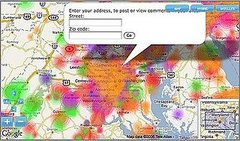
I have a suggestion for you AT&T.  Why don't you provide more transparency about where you are expanding coverage on a daily basis on a beautiful coverage map like we do on our dead zones coverage maps (below)?  Is it because you want the press and consumer advocacy groups like Deadcellzones.com to be as confused as possible when tracking your coverage claims and expansion?  Your press hype is "off the charts" and your lack of clarity of where you are expanding coverage is too confusing for any AT&T customer to understand the value of your daily regional press releases.


Providing a map of where you are expanding coverage would allow customers, employees, service providers, consumers groups and cell phone tower operators to understand where you have invested your resources to improve capacity and connectivity.   Your AT&T maps are completely worthless to the average consumer now that dropped calls and data congestion are more common than it was ten years ago in 2000.  Your senior management team needs to wake up and stop be paranoid about your competition because your lack of clarity and transparency is appalling.

Related Posts:

AT&T Dropped Calls
Where is AT&T Fixing Outdoor Reception?
Identifying Dropped Call Locations
AT&T Service Plans and Coverage Review

Popular Posts