Few things are more frustrating than dropped calls, weak signals, or slow data speeds, especially when you rely on your phone for work, travel, and emergencies. Cell phone reception issues are common in rural areas, large buildings, and places with heavy network congestion. Fortunately, cell phone reception boosters—also known as signal boosters—offer an effective solution. These devices amplify weak cellular signals, improving call quality, data speeds, and overall connectivity. But with so many options on the market, how do you know which booster is best for you? This article explains how reception boosters work, reviews the top models, and highlights the features you should look for before making a purchase.

Showing posts with label CDMA. Show all posts
Showing posts with label CDMA. Show all posts
Credo Mobile Coverage Maps

Credo Mobile Coverage Map on Verizon
Credo Mobile is a mobile virtual network operator (MVNO) that offers cell phone services in the United States. As an MVNO, Credo Mobile does not operate its own cellular network infrastructure but instead utilizes the network of another major carrier. Here's some key information about Credo Mobile:
Focus on Social and Environmental Causes: Credo Mobile positions itself as a socially and environmentally conscious mobile service provider. They support progressive causes and donate a portion of their revenue to various nonprofit organizations dedicated to issues such as civil rights, climate justice, and peace.
Network Coverage: Credo Mobile operates on the network of Verizon Wireless, which provides nationwide coverage across the United States. By utilizing Verizon's network, Credo Mobile offers coverage in both urban and rural areas, with access to 4G LTE and 5G networks where available.
Service Plans: Credo Mobile offers a variety of service plans, including both individual and family plans. Their plans typically include unlimited talk, text, and data, with varying data speeds and data allowances. They also provide options for device financing and bring-your-own-device (BYOD) programs.
Contract Freedom: Credo Mobile differentiates itself by offering "Contract Freedom." They reimburse customers for early termination fees incurred from their previous carrier when they switch to Credo Mobile.
Device Selection: Credo Mobile offers a range of smartphones, including popular brands such as Apple, Samsung, and Google. They also have options for refurbished devices and a selection of eco-friendly and fair trade accessories.
Customer Support: Credo Mobile emphasizes its commitment to customer service and has a dedicated support team available to assist customers with inquiries or technical issues.
Specific plan details, pricing, and coverage availability may vary, so it's advisable to visit Credo Mobile's official website or contact their customer service for the most up-to-date information on their current offerings.

Please submit your reviews of the service and coverage below in the discussion.
Budget Mobile Coverage Map

Budget Mobile Coverage Map
Budget Mobile is a mobile virtual network operator (MVNO) that offers affordable cell phone services in the United States. As an MVNO, Budget Mobile does not operate its own cellular network infrastructure but instead utilizes the network of another major carrier. Here's some key information about Budget Mobile:
Eligibility: Budget Mobile primarily focuses on providing Lifeline Assistance service, which is a government program that offers free or discounted phone service to eligible low-income individuals and families. To qualify for Budget Mobile's services, you must meet specific income requirements or participate in qualifying government assistance programs.
Lifeline Assistance Plans: Budget Mobile offers Lifeline Assistance plans that provide a certain number of free minutes, text messages, and data each month, depending on your state of residence. These plans are designed to help eligible individuals stay connected at an affordable cost.
Network Coverage: Budget Mobile utilizes the network of a major carrier to provide coverage. The specific network you will have access to depends on your location and the partnership agreements in place. It's important to check the coverage available in your area before choosing Budget Mobile.
Device Options: Budget Mobile may offer a selection of devices for purchase, including basic feature phones or low-cost smartphones. Additionally, in some cases, they may support Bring Your Own Device (BYOD), allowing you to use your existing compatible device with their service.
Customer Support: Budget Mobile provides customer support via phone, email, and online chat. They have a dedicated support team available to assist customers with inquiries, technical issues, and account management.
Budget Mobile primarily focuses on providing Lifeline Assistance services, so their offerings may be specific to eligible low-income individuals and families. If you believe you may qualify for Lifeline Assistance, it's advisable to visit Budget Mobile's official website or contact their customer service for more information on eligibility requirements and the specific plans and coverage available in your area.

Mobile Phone LifeLine (Government Subsidized) Approved States
All Budget Mobile Lifeline Eligible Customers Receive: FREE cell phone 500 FREE MINUTES and 500 FREE TEXTS for the First 3 Months! (350 FREE minutes and 350 FREE Texts thereafter every month automatically).

Budget Mobile Data Plans
You can purchase a Budget Mobile SIM card, which can be done on the BudgetMobile.com website. Once you have the SIM card in your possession, you can either Activate a New Phone Number or Port Your Existing Phone Number.
Please submit your reviews of the service and coverage below in the discussion.


Ecomobile Coverage Map

Ecomobile Sprint Coverage Map
Eco Wireless is a prepaid wireless MVNO that operates on Sprint's CDMA & LTE networks.
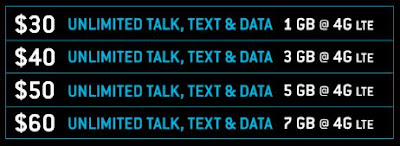

Please submit your reviews of the service and coverage below in the discussion.
CellNUVO Coverage Map & Data Plans
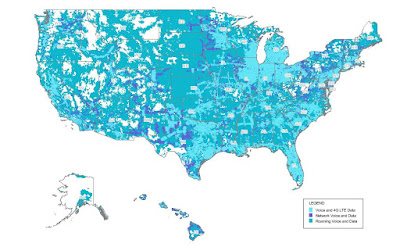
CellNUVO is a prepaid wireless MVNO that operates on Sprint's CDMA and LTE network.
Wireless companies have not been consumer friendly for years, locking customers into high priced, long term contracts, limiting usage and way overcharging. CellNUVO gives you 4G LTE network with NO Limits. Simply choose between our $19 a month Flex plan or our $0 a month Infinite plan and pay nothing, nada, zip, zilch, $0 - Be Free!
CellNUVO service has no limits, no thresholds, no slowdowns, no overages, no fine print. You won't run out of data, minutes or texts because your credits grow as you use the service: our system “automatically” manages it for you.
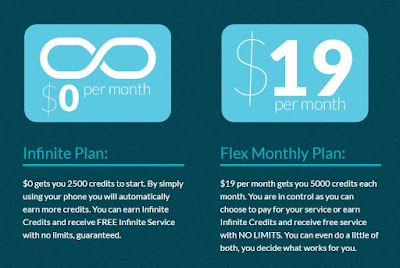

How do Nuvo Credits Work
Please submit your reviews of the service and coverage below in the discussion.
Boost Mobile Coverage Map

Boost Mobile is a prepaid wireless service provider in the United States. It offers no-contract cell phone plans and operates using the network infrastructure of T-Mobile. Boost Mobile was initially founded in 2000 and has undergone ownership changes over the years.
As a prepaid carrier, Boost Mobile provides customers with a range of flexible plans that include unlimited talk, text, and data. They offer different plan options with varying data speeds and data allotments to suit individual needs. Some plans may also include additional features such as mobile hotspot usage or international calling options.
Boost Mobile utilizes the network of T-Mobile, which provides nationwide coverage across the United States. This means that customers can expect reliable coverage in many areas. However, it's always recommended to check the coverage map or inquire about coverage in your specific location before selecting a wireless service provider.
One unique aspect of Boost Mobile is its "Boost Perks" program, which offers various rewards and benefits to customers. These perks can include discounts on shopping, dining, entertainment, and more.
Boost Mobile also offers a selection of smartphones for purchase, including both budget-friendly options and popular flagship devices. Customers can either bring their own compatible device or choose from the available devices offered by Boost Mobile.
Boost Mobile is a prepaid wireless MVNO that operates on the network of Sprint CDMA and LTE networks. Boost Cell Coverage Map.

You can purchase a Boost Mobile SIM card, which can be done on the Boostmobile.com website. Once you have the SIM card in your possession, you can either Activate a New Phone Number or Port Your Existing Phone Number.
Please submit your reviews of the service and coverage below in the discussion.
With a strong data connection don`t forget to access your online private workspace remotely from any part of the globe with cloud hosted citrix vdi from CloudDesktopOnline, You can also add complete MS Office suite to the same desktop by visiting www.O365CloudExperts.com powered with 24*7*365 days top-notch technical support from one of the leading cloud hosting solution providers – Apps4Rent.com.
Boost Mobile Data Plans
You can purchase a Boost Mobile SIM card, which can be done on the Boostmobile.com website. Once you have the SIM card in your possession, you can either Activate a New Phone Number or Port Your Existing Phone Number.
Please submit your reviews of the service and coverage below in the discussion.

Armed Forces Wireless Coverage Map

Armed Forces Wireless Coverage Map

Armed Forces Data Plans
Armed Forces mobile operates as an MVNO on the Verizon Network. It is unclear weather you able to bring your own phone and purchase a SIM or if purchasing a phone required?
Purchase an Armed Forces SIM card, which can be done on the website. Once you have the SIM card in your possession, you can either Activate a New Phone Number or Port Your Existing Phone Number. Once you receive your SIM, call 888-804-1448 to activate your service - or ACTIVATE by filling out this form.
Please submit your reviews of the service and coverage below in the discussion.
Affinity Cellular Coverage Area Map
 |
Affinity Cellular Coverage Map |
Affinity Cellular is a wireless service provider in the United States that specializes in offering cell phone plans and services tailored for seniors. Here are some key features of Affinity Cellular:
iPhone 4S Speed Test Chart
 |
| iPhone 4S Download Speeds Compared |
AT&T was twice as fast as Verizon in Web browsing with the iPhone 4S, recording average page load times of 1.29 seconds, compared with Verizon's 2.60 seconds. Sprint's version of the phone took an average of 6.44 seconds for Web browsing page loads. In terms of specific data download speeds, AT&T had an average speed of 3.2 Mbps, compared to 1.0 Mbps for Verizon and .5 Mbps for Sprint, one-fifth the speed of AT&T. The peak data download speed on AT&T was 6 Mbps over its 3G GSM HSPA+ network.

Are Verizon Customers Dropping More Calls?
 Here is a letter from a 10 year Verizon customer in Virginia, who wrote to customer care. This issue has been escalated to the President level in the organization to resolve the problem. This an example of what is happening for millions of Verizon customers who previously had good coverage and are now suffering from more dropped calls. It just so happens that this customer is very persistent about getting the problem resolved but not everyone has the time or the skills to do this. Nor does Verizon have the resources to pursue every customer service problem in this manner. It is worth reading and just another reason that the current theoretical wireless coverage maps should be outlawed? Its false marketing and degradation once good coverage areas is becoming a big problem now that Verizon is moving to 4G / LTE. Wireless networks are breathing more than ever to optimize network capacity and thus why you might see 5 bars and then none standing in the same location. Read the full letter below about a Verizon trouble ticket resolution and please share any other examples in the comments or send us an email.
1st Customer Letter to Verizon
Dear Verizon,Is it possible to request a physical visit to the area in question (below), with measurements taken and reports made? My family and I drive this area a total of 12 times or more per day. We have been doing that for over ten years. WE HAVE NEVER HAD ONE DROPPED CALL IN THIS AREA FOR ALL THOSE YEARS. Why did we begin to drop most calls, suddenly, two months ago? I am specifically speaking of my driveway, 123 XYX Drive. Could an area suddenly, as if by magic, become "marginal", after working well for all those years?
My suspicion is that Verizon, by upgrading to the higher "G" coverages and has made equipment changes in this area. This new equipment places voice communication second to all the other services which the new smartphones sold. I believe that is what has caused my problem with 123 XYX Drive, etc.
I'd like to have a definitive answer, from Verizon, not some nonsense about secondary coverage areas, explaining why I still get a five-bar signal AND drop calls all the time? That doesn't sound like a coverage problem. It sounds like a Verizon equipment problem to me.
As far as being in a marginal coverage area, I've seen Verizon make those claims before. Any problems Verizon doesn't want to address are suddenly in a marginal coverage area.
Please see below, coverage maps copied from the Verizon published coverage map,
The map below is location 123 XYX Drive. As stated above, coverage just perfect for ten years. Suddenly, two months ago, the signal stays the same, calls are dropped constantly. Is it magic?

Below is another paste from the same Verizon coverage map showing the four-mile area east of my driveway on Rt. 221 where past wonderful coverage has degraded to many dropped calls with no loss in signal.


The last pasted map below is an area that Verizon knows is bad and has elected not to fix it. We get dropped calls in that area on a daily basis. The specific area is on 221 between Mays Farm Road and the upside-down question mark looking little road, just east of the 221 shields. To quote Verizon's answer on past complaints about the area, "This is an area of known problems." That's it, no fixed date, no nothing.


Please re-submit my complaint to the proper parties and include these Verizon coverage maps. I really would appreciate some sort of meaningful answer regarding the sudden degradation in service.
1st Verizon Response Letter
Mr. Customer,Your trouble ticket for service problems in your home area is now resolved. The ticket states: “located in a marginal coverage area due to distance from cell sites; there are plans for a new site in your area but not estimated time of when that will be up and running. There were currently no issues found w/ the surrounding cell sites.”
Feel free to email me back with any other questions or concerns and we can move forward or see what the next step may be.
Thanks,
Nate – Verizon Wireless Tech Support
woodana@NE.VerizonWireless.com
2nd Verizon Response Letter
Mr. Customer,From previously speaking to members of our Network Repair Bureau, I have been told that coverage can change. The majority of the time the coverage is increasing but I’ve been told that may not always be the case. I’m going to forward your email over to one of our NRB representatives and try to re-escalate this issue. I’ll email you back once I receive additional info about this problem. I also wanted to make sure that you were still marking the affected calls by dialing ### - SEND.
Thanks,
Nate – Verizon Wireless Tech Support
Customer Response to Verizon Wireless
Nate – Verizon Wireless Tech Support,
The coverage matter is a convenient out for Verizon. Their disclaimer really removes any value from the coverage maps they issue. (These Coverage Locator maps depict predicted and approximate wireless coverage. The coverage areas shown do not guarantee service availability and may include locations with limited or no coverage. Even within a coverage area, there are many factors, including customer’s equipment, terrain, proximity to buildings, foliage, and weather that may impact service. Some of the Coverage Areas include networks run by other carriers, the coverage depicted is based on their information and public sources, and we cannot ensure its accuracy.) This really makes any coverage argument totally invalid and a waste of time; except, of course, for Verizon to put forth as an unreal sales tool.
However, I might think that the cessation of service is a valid argument, and, as "supplier", Verizon would be held liable to continue the past level of service, unless they announce a change. In this instance, no change was announced to me.
I guess, unless they do something for me, my only recourse is to leave Verizon and go over to US Cellular who, according to "hearsay" has this area buttoned down tight. As you see from my record, I don't often change carriers, so I'm loath to do that.
Do let me know about the ##### or the *****.
Thanks, Nate,
Customer
Commentary & End Result
Lots of developments. After calling both Wireless and Landline executive offices at Verizon, a work order for both of my problems was issued and has gone away. A Verizon engineer surveyed my area of dropped calls and found that the PN on a tower about 18 miles away, was taking my calls and disconnecting them. They finally agreed on a new PN and the dropped calls problem is solved!
The more annoying problem is still in the works. That's the one where all calls, originated from a Verizon cell phone, within my area, showed "out of area" on my landline caller ID. If I called my Verizon landline from the same room, as my local Verizon cell phone, the landline caller ID showed "Out of area". This is annoying because "Out of area" calls are usually from salespeople and we never answered them. Now, seeing it might be one of us calling, we get to speak to an inordinate amount of salespeople!
Emily's note from Sprint is very pleasing. Not only does she seem to really care, but she is also reaching out across the Country. Not too many people around like that anymore. Sprint has always had minimal coverage in our area. I do not know what she's referring to when she says "granular detail", I've not heard that term used before. I'll give her a call, but, don't hold out much hope - unless they've increased their coverage.
Customer
How is Verizon's Network Handling the iPhone?

We have started to receive a lot more dropped call and dead zone complaints from Verizon Wireless customers this year now that Verizon has iPhone running on its network. The Verizon wireless coverage problems seem to be occurring more on the East Coast vs the West Coast. See our Verizon Dead Zones Map.
It also seems a little hypocritical of AT&T and Verizon to be offloading data on the iPhone to WiFi when you are paying for expensive and overpriced 3G data plans. WiFi is free and smart consumers are going to need to learn how to live without 3G and 4G in the future because the networks will never be able to handle the traffic. Wireless armageddon is coming in 2012 and the only solution is more open WiFi networks distributing the traffic.
Verizon's CDMA iPhone only works on 3G is has been reported to be much slower than the AT&T network. Verizon's iPhone is at a disadvantage because it accesses Verizon’s EV-DO network, which tops out at 3.1 mbps down, while the AT&T iPhone is capable of hitting 7.2 down on AT&T’s HSDPA network. I
Why is Verizon Wireless Reception Poor on the East Coast?

GSM CDMA Carrier Handset Competition Fair?

AT&T will soon consolidate T-Mobile and become the only GSM carrier in the US. Tracfone is a pre-paid carrier that offers both GSM and CDMA so it doesn't really count. Is this fair competition? T-Mobile has been the only GSM alternative to AT&T and post-acquisition there will be none. What happens to consumers who purchased GSM phones and want to move to another carrier? What happens to the handset manufacturers around the World who want to sell their products in the US? Why should consumers care about GSM? If you travel internationally you will know what I am talking about. GSM is the World standard for phones and allows you to travel in most countries around the World without buying a new phone.
Consumers will be facing very limited choices for wireless service in most regions. The result will be only two competing technologies (CDMA & GSM) that all wireless carriers use, all the small regional carriers have to negotiate roaming deals with either Verizon or AT&T if they want to offer full coverage to their customers. The deal would further entrench the playing field with one CDMA giant and one GSM giant and fair negotiations would be even harder.
Verizon is a CDMA carrier and Sprint operates iDen and CDMA phones that donot work in most countries when you travel around the world. Smaller regional carriers MetroPCS, Leap, US Cellular and Tracfone all use CDMA as well.
10 Differences Between AT&T & Verizon iPhones

Data Speeds: AT&T does have a faster data network than Verizon's CDMA. AT&T iPhone 5 will likely be compatible with HSPA+ and the iPhone 5 for Verizon will likely be on LTE. No one knows exactly what the speeds will be but you will not likely notice the difference as a user.
Data Plans: Paying $29.99 per month for unlimited data is very expensive especially when you are only using 50% or less of your voice minutes and that usage is declining.
Multi-Tasking: AT&T is only capable of talking on the phone while surfing the web or reading email. Verizon says they are working on a solution but it will likely require WiFi.
Battery: We speculate that AT&T's network might be a bit more battery-friendly than Verizon's CDMA network which has been notoriously bad on the Motorola Droid battery.
Tethering: It's not clear who will offer to tether and at what price but we speculate this will be an issue. Most sophisticated users are simply tethering their iPad or Laptops and not subscribing to an additional data plan for the device. T-Mobile's HSPA+ network is most friendly about tethering on the Android G2 and MyTouch phones.
Antenna: Verizon moved the antenna on the phone presumably to fix the death grip problem. However, it's not clear if the Verizon phone will still need an iPhone bumper to prevent the hands from shorting out the antenna signal.
Traveling: GSM networks are more widely used worldwide and it's easier to switch data plans and SIM cards when traveling overseas.
SIM Cards: CDMA Verizon iPhones will not use a SIM card making it more difficult to switch handsets.
Dropped Calls: In theory, Verizon CDMA should drop fewer calls but it's not clear what impact the iPhone will have on its slower 3G data network. It will likely be good at first but who knows what will happen if 5-10M users suddenly start taxing the network with data usage.
No Contract: Verizon is starting to sell the Verizon phone without a contract as rumored in the press release.Why Does Verizon Want You to Turn Off WiFi on Your Phone?

I think Verizon feels threatened by public Wifi and wants to make sure that smartphone users are discouraged from using WiFI. LTE does compete with Wifi and in many cases is much faster. Not only that but Verizon doesn't even have any phones that run on 4G LTE yet.
I also received some strange looks when I said that I have the fastest 4G phone the G2 and it runs on HSPA+ which is 4G. I have been using an Android phone for almost 3 years and I highly recommend using WiFI whenever possible. WiFi connections can be 3 to 10X faster than Verizon's current CDMA and even new LTE network which is not available on any smartphones. Try going to Europe or outside the US and only use WiFi for VoIP Skype or Google Voice calls. Its free and can save you a lot of money.
How Many Verizon 4G LTE Customers Are Willing To Pay $600-$960 Per Year for 5-12 mbps Download Speeds?
 |
| How Does 4G LTE Compete with Free? |
Verizon new 4G LTE data plans will provide customers with 5 gigabytes of data download for $50 per month or 10 GB for $80 per month, with overage charges of $10 per GB. Verizon Wireless said it will not throttle speeds for customers going over their allotted bucket of bytes. Verizon is launching 4G LTE services in 39 markets and 62 Verizon 4G LTE airport locations covering 33% of the population or 100 million potential customers at the end of 2011. Verizon won't be adding a voice product to the LTE offering until they have reached a certain level of scale with LTE coverage in the late 2012 or early 2013 time frame.
Verizon 4G LTE is not initially for smartphones and the device lineup for the LTE service will include a single USB modem at launch provided by LG Electronics & Pantech Corp. The USB devices for laptops will sell for $100 after all rebates and a mandatory two-year contract. The USB devices will include both CDMA and LTE capabilities with the ability to seamlessly handoff when roaming from the LTE network to the CDMA network, but having to reconnect when going from CDMA to LTE.
Verizon Wireless has said their 4G network will provide downlink speeds of between 5-12 mbps using the carrier’s 700 MHz spectrum holdings. The average person doesn't realize yet that at these speeds LTE competes with free broadband WiFi that is typically faster. Will consumers spend the extra $600 - $900 per year for data services that are most often free over Wifi? The reality is Wifi hotspots vs LTE are growing 25X faster than LTE. If its free its me and if I have to pay now way!
How to Get a Free Sprint 3G Femtocell

Sprint Airave 3G EV-DO Femtocell
Sprint 2G Airave femtocell has been around for almost 3 years since 2007 and sells for $100. For some reason that makes no business sense, Sprint will still continue to offering its' 2G data version of Airave for $99.99, plus a required $4.99/month plus an activation fee of $10 for a single line or $20 multi-line plans. We don't have a clue why they would continue charging for a old product other than possibly trying to avoid cannibalizing their existing customers.
Sprint is riding the data wave that AT&T creating launched their AT&T femtocell earlier this year. Sprint seems to be doing it right and offering the device for free which is how it should be. We are not quite sure what criteria will get you the "qualified customer" status yet but here are some ideas below that might help get you a free femtocell:
- Find out if the Sprint 3G femtocell is available in your market.
- Use Sprint Dead Zones Map map to share reception problems in your neighborhood (see map below)
- Complain a lot to Sprint customer service that your home reception is poor
- Document your dropped calls on a daily basis using your monthly bill
- Show Sprint that you have been a customer for many years
- Show Sprint that you have multiple Sprint phones in the house
- Show Sprint that you have multiple subscribers in the house
- Show Sprint that you are a Clearwire customer
- Become friendly with your local Sprint store sales manager
- Find out when your contract expires and use renewal as leverage

Popular Posts
-
 Yosemite National Park, located in California, is known for its stunning natural beauty and attracts a large number of visitors each y...
 -
 Understanding why it unlocks makes prevention a lot easier. The most common reasons include: 1. “Raise to Wake” activates inside your pock...
 -
 Which City Gets The Most Cell Phone Coverage Complaints?
 -
Spam calls and texts aren’t just annoying—they waste time, invade privacy, and can even trick people into scams. With robocalls and phishi...
-
Do Wireless Carriers Care About Reported Dead Zones? What They Prioritize—and What Actually Changes If you’ve ever stared at a “No Service...
-
For years, Verizon Wireless has been known as the most reliable network in the United States. Many customers paid more for Verizon service...
-
In recent years, the race to connect the world wirelessly has intensified with innovations like SpaceX's Starlink sate...
-
In the rapidly evolving world of mobile connectivity, choosing the right network provider can be daunting. With giants like Verizon , AT...
-
 Cricket Wireless Coverage Map Cricket vs AT&T vs Boost Mobile: Coverage & Network Comparison (2025) While Cricket Wireless, A...
 -
 Airvoice Wireless Coverage Map Airvoice Wireless Database Plans You may use any unlocked 850/1900 MHz GSM device with Airvoice. You ...


